
Introduction & What Is Gluco6?
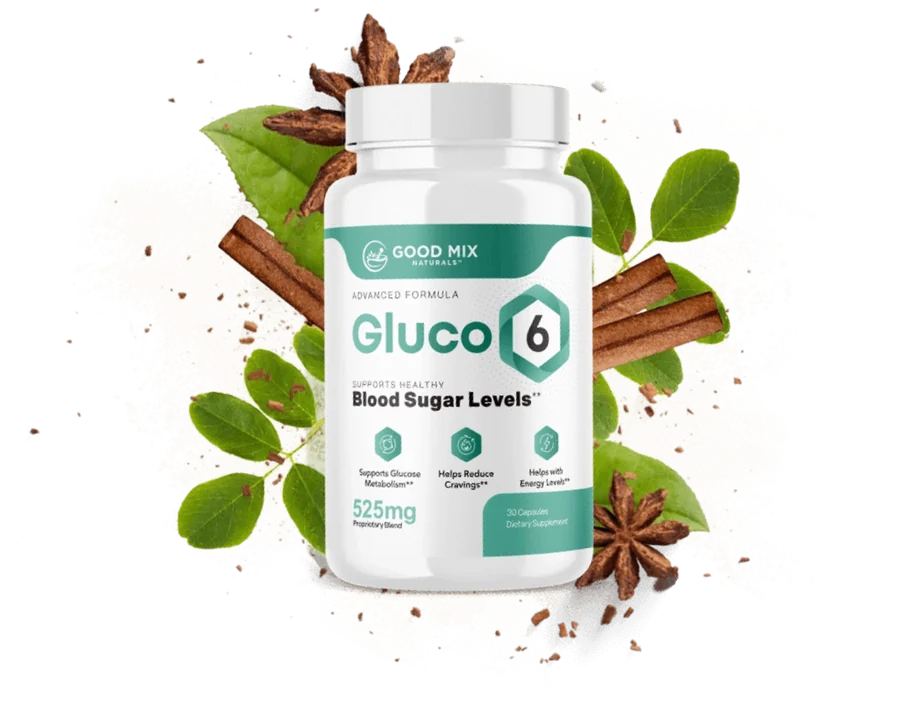
Gluco6 is a once-daily capsule marketed for blood sugar support, sold under the Good Mix Naturals label. One capsule is taken in the morning before breakfast. The bottle contains 30 capsules and states a 525mg proprietary blend of six ingredients: Sukre, TeaCrine, gymnema sylvestre, chromium, Ceylon cinnamon and green tea.
This is a category that deserves more care than most. Blood sugar supplements are marketed to people who often have a diagnosed condition, take prescription medication, and face real consequences if their management slips. That is different from a memory formula or a sleep aid, where the downside of an ineffective product is mostly the money. Here, a product that leads someone to skip a dose, delay an appointment or assume things are handled can cost more than $69.
The marketing makes two claims that set this review's agenda. It cites A1C reductions of up to 2.8 points in 90 days, and weight loss of up to 29 pounds. Those are not vague wellness claims. A1C is a specific laboratory measurement, 2.8 points is a specific number, and it can be compared directly against what medications achieve. We do that comparison below, and it is the most important thing on this page.
The second thing that sets the agenda is on the bottle itself: 525mg, proprietary blend. That single figure lets us check the dose arithmetic against the research the marketing invokes, which is a rarer opportunity than it sounds. Below: the proposed mechanism, the ingredient evidence, the dose problem, pricing and refund terms, and what the literature actually supports. Disclosure, as on every page of this site: we are independent reviewers, and purchases through our links may earn us a commission at no additional cost to you.
How Does It Work?
The marketing's central mechanism is GLUT-4 receptor overload. GLUT-4 is real and well characterized: it is the glucose transporter that moves glucose from the bloodstream into muscle and fat cells, and insulin is what signals it to the cell surface. Impaired GLUT-4 translocation is genuinely part of the biology of insulin resistance, and it appears throughout the diabetes research literature. This is not invented.
What is invented is the leap. The marketing proposes that Sukre, described as a compound derived from acacia sap, relieves pressure on GLUT-4 receptors and thereby restores glucose handling. There is no published clinical evidence that any oral supplement improves GLUT-4 translocation in humans in a way that changes blood sugar outcomes. The mechanism is a hypothesis attached to a real receptor, and borrowing the credibility of established biology is exactly what makes it persuasive. A named receptor in a sales page is not the same thing as a demonstrated effect on it.
The rest of the formula follows a familiar pattern for the category. Gymnema and chromium are the two ingredients with the most blood sugar research behind them. Cinnamon is the most popular and most equivocal. Green tea and TeaCrine, a form of theacrine, are metabolic and energy inclusions rather than glucose ones.
There is one genuinely important point about GLUT-4 that the marketing does not make, and it undermines the pitch. The most established non-pharmaceutical way to increase GLUT-4 translocation is muscle contraction. Exercise moves GLUT-4 to the cell surface through a pathway that does not require insulin at all, which is a large part of why physical activity improves glucose control even in people with insulin resistance. If GLUT-4 is the mechanism a reader cares about, the intervention with the strongest evidence for acting on it is free, and it is walking.
Core Ingredients Analysis
| Ingredient | Typical researched dose | Evidence snapshot |
|---|---|---|
| Chromium | 200–1000 mcg daily | The best case in the blend. NCCIH notes chromium may help improve A1C, fasting glucose and insulin resistance in type 2 diabetes, though the overall evidence is limited. Doses are in micrograms, so it fits within the blend. |
| Gymnema sylvestre | 200–800 mg daily (often more) | Preliminary studies on glucose markers and sugar cravings. Can lower blood sugar, which matters for interaction with medication. |
| Ceylon cinnamon | 1–6 g daily | Mixed results across trials. NCCIH concludes more research with standardized formulations is needed. Doses used are in grams. |
| Green tea | 200–800 mg extract | Studied for metabolic and cardiovascular markers. Not established for glycemic control. |
| TeaCrine (theacrine) | 100–300 mg | Studied for energy and focus, not blood sugar. No glycemic outcome research. |
| Sukre | Not established | Branded ingredient carrying the GLUT-4 story. No published clinical trials on glycemic outcomes in humans. |
Now the arithmetic, which is the heart of this review. The entire blend is 525mg. Add the low end of the researched doses for just three of the six ingredients: cinnamon at 1 gram (1,000mg), gymnema at 200mg, green tea extract at 200mg. That is 1,400mg before counting TeaCrine or Sukre at all, and it is already nearly triple the total weight of everything in the capsule.
The conclusion is not a matter of interpretation. It is not possible for cinnamon to be present at a researched dose in a 525mg blend that also contains five other ingredients. The same applies to gymnema and green tea at the levels their studies used. Chromium is the exception, because it is dosed in micrograms and fits comfortably. So the one ingredient with the strongest evidence in this formula is also the one that can plausibly be present at a meaningful amount, and the rest are, at these totals, present in quantities the research does not speak to.
Because the blend is proprietary, we cannot say how the 525mg is divided. That is the point of a proprietary blend. But the ceiling is fixed, and the ceiling alone answers the question for most of the label.
Safety notes, which matter more here than in most categories. Gymnema can lower blood sugar, and combined with diabetes medication this raises a genuine hypoglycemia consideration. Chromium may interact with insulin and some other medications. Green tea extract has been associated with liver injury in rare cases in concentrated form. TeaCrine is a stimulant-adjacent compound. Anyone taking diabetes medication should tell their doctor before adding this or any similar product, because the interaction is not hypothetical and the monitoring is straightforward once the doctor knows.
The A1C Claim, Checked
The marketing cites A1C drops of up to 2.8 points in 90 days. This claim can be placed in context precisely, because A1C is one of the most standardized measurements in medicine and the effect sizes of the drugs are well documented.
| Intervention | Typical A1C reduction |
|---|---|
| Metformin (first-line medication) | Roughly 1.0 to 1.5 points |
| Intensive lifestyle change (diet, activity, weight loss) | Roughly 0.5 to 1.0 points, sometimes more with substantial weight loss |
| Chromium supplementation | Small and inconsistent across studies; NCCIH describes the evidence as limited |
| Cinnamon | Mixed; NCCIH concludes standardized research is still needed |
| Gluco6 as claimed | Up to 2.8 points |
The claimed figure is roughly double what the first-line prescription medication achieves, from a 525mg capsule taken once a day. No supplement has demonstrated anything approaching this in a controlled trial, and the finished Gluco6 formula has never been tested independently at all. If a once-daily botanical blend genuinely outperformed metformin by a factor of two, it would not be sold through an affiliate funnel. It would be the biggest story in diabetes medicine.
The weight loss figure deserves the same treatment. Up to 29 pounds is a substantial change, comparable to what is seen with significant medical intervention. Nothing in a 525mg blend of cinnamon, gymnema and green tea has produced results of that magnitude in published research.
The phrase "up to" is doing the legal work in both claims, and it is worth naming. "Up to 2.8 points" is satisfied if one person once reported that number, and it makes no promise about anyone else. It reads as a result and functions as an anecdote.
Real User Benefits & Drawbacks
Pros
- Chromium is a legitimate inclusion with the most supportive evidence in the blend, and its microgram dosing means it can plausibly be present at a researched level.
- All six ingredients are named, even though the amounts are not.
- Once-daily single capsule, which is a realistic format for long-term adherence.
- 60-day money-back guarantee processed through ClickBank rather than the vendor directly.
- Two digital bonus guides included with the larger packages.
Cons
- 525mg total cannot accommodate researched doses of cinnamon, gymnema or green tea, which is arithmetic rather than opinion.
- The A1C claim of up to 2.8 points exceeds first-line medication and is supported by no published evidence.
- The GLUT-4 mechanism is a hypothesis borrowing the credibility of real biology; no oral supplement is established as improving GLUT-4 translocation in humans.
- Proprietary blend conceals how the 525mg is divided.
- No independent trials of the finished formula.
- Real interaction risk with diabetes medication, in a product marketed to people likely to be taking it.
Pricing, Packages & Refund Policy
Gluco6 is sold through the official website in multi-bottle packages. At the time of writing, the official page lists 2 bottles at $69 per bottle ($138), 3 bottles at $49 per bottle ($147), and 6 bottles at $39 per bottle ($234), all with free US shipping. The 3-bottle and 6-bottle packages include two digital bonus guides, Neuro Nourish and Sweety Slim. Third-party pages advertise different figures, including $79 for a single bottle, so confirm live pricing at checkout.
The official page states a 60-day money-back guarantee, with refunds covering the product price and excluding shipping. Checkout runs through ClickBank, which means the refund is processed by the retailer rather than at the vendor's discretion. Some third-party pages claim a 180-day term. That discrepancy is worth resolving before purchase rather than after, and the term shown at your own checkout is the one that governs.
One neutral note on the package structure: the smallest option is two bottles, so the minimum purchase is $138 at the listed price.
How It Compares to the Alternatives
Against standalone chromium: the ingredient with the best evidence in this formula is sold on its own, at a documented dose, for a few dollars a month. If chromium's modest and inconsistent effect on glucose markers is what a reader is after, buying chromium is the direct way to get it at a known amount.
Against cinnamon you can measure: the trials that produced cinnamon's mixed results used 1 to 6 grams daily. That is a quantity available in a jar in any supermarket, and it costs almost nothing. Whatever cinnamon does or does not do, it cannot do it from a share of 525mg.
Against exercise, on the marketing's own terms: this is the comparison the GLUT-4 framing invites. Muscle contraction increases GLUT-4 translocation through an insulin-independent pathway, and this is established physiology rather than a hypothesis. A walk after meals acts on the exact receptor the sales page is built around, with better evidence than anything in the capsule, and at no cost.
Against the same operation's brain product: worth knowing before buying anything else from this seller. Gluco6's affiliate terms name Tony Bailey and Molly Leavitt as its brand ambassadors. The identical pair is named in the affiliate terms for Neuro Serge, a supplement sold for memory whose named ingredients are blood sugar botanicals and whose two included bonus guides are both about blood sugar. The same operation appears to sell a comparable concept twice, once branded for glucose and once for the brain.
Against a cholesterol-focused formula: readers whose bigger metabolic concern is cholesterol rather than glucose can compare our Cholibrium review, a mushroom-based formula aimed at lipid support. The evidence pattern is similar: ingredient-level research, no independent trials of the finished product.
Against medical management: for anyone with prediabetes or type 2 diabetes, the interventions with real evidence are unglamorous and effective: dietary change, physical activity, weight loss where appropriate, medication where indicated, and regular monitoring. The Diabetes Prevention Program showed that intensive lifestyle change reduced progression to type 2 diabetes more than metformin did, which is one of the most encouraging findings in the field. For related reading, see our article on how to lower blood sugar naturally.
What the Independent Research Actually Says
The direct verdict on this category. The NIH's complementary health center's page on diabetes and dietary supplements states plainly that for most supplements, there is not evidence to support a beneficial effect on diabetes or its complications. It also notes that chromium may help improve A1C, fasting glucose and insulin resistance in type 2 diabetes, which is the most supportive thing the evidence says about anything in this bottle, and it is a qualified statement rather than a conclusion.
The FDA's specific warning. The same page relays the FDA's caution about products claiming to replace diabetes medicine or offer a natural diabetes cure, noting these are harmful if used in place of effective treatment. That warning exists because this category has a documented history of causing exactly that harm, and it is the single most important sentence a shopper here can read.
Cinnamon, specifically. The NCCIH's cinnamon page summarizes the mixed trial results and the need for standardized research. Its findings are the reason the dose arithmetic above matters: even at gram-level doses, the results are equivocal.
What actually manages blood sugar. The NIH's diabetes institute maintains a plain-language guide to managing diabetes, covering the interventions with the strongest evidence. Nothing in it is exciting, and all of it is better supported than the contents of this capsule.
The chromium literature itself. For readers who want the primary sources, this PubMed search on chromium and glycemic control shows both the volume of meta-analyses and their inconsistency, which is the honest state of play for the formula's best ingredient.
The regulatory frame. Gluco6 is regulated as food under the FDA's dietary supplement framework, with no pre-market efficacy review, and proprietary blends are permitted under current labeling rules. That is why a product may state 525mg and decline to say how it is divided.
What to Expect: A Realistic Timeline
- Weeks 1–2: A1C reflects roughly three months of average glucose, so it cannot meaningfully change this fast regardless of what is taken. Any early impression is about energy, appetite or expectation, not glycemic control.
- Weeks 3–8: If a reader is evaluating this at all, the only honest instrument is data: fasting readings from a home meter, logged, at consistent times. Impressions are not measurements, and blood sugar is one of the few things a person can actually check at home.
- Weeks 9–12: The first point at which a repeat A1C would reflect the period of use, and the end of the refund window. If logged fasting numbers have not moved by here, the product is not moving them.
Throughout, one rule overrides the timeline entirely: do not change or stop any prescribed medication to test a supplement, and tell your doctor you are taking it. Gymnema and chromium can affect glucose, so the combination is worth monitoring rather than guessing at. That conversation costs nothing and makes the whole exercise safer.
Who the Evidence Applies To, and Who Should Avoid It
The population this product's evidence applies to is narrower than the marketing suggests, and it is worth stating precisely. Chromium has some support for modest improvements in glucose markers in people with type 2 diabetes, at doses measured in micrograms, with results the NIH describes as limited. That is the extent of it. Nothing in the published record supports the A1C figure the marketing cites, nothing supports the GLUT-4 mechanism as an oral supplement effect in humans, and nothing at all has been published on the finished formula.
Where this product is likely to find its buyers is among people who have just been told they have prediabetes or early type 2 diabetes, who are frightened, and who would prefer a capsule to a lifestyle overhaul. That reaction is human and the fear is appropriate, because the condition is serious. The difficulty is that this is also the population with the most to lose from a product that does not work, because the window in which prediabetes responds well to intervention is the same window a supplement can quietly consume. The Diabetes Prevention Program demonstrated that intensive lifestyle change outperformed metformin at preventing progression. That is a genuinely hopeful result, and it is about the thing the capsule is standing in for.
Several groups should be particularly careful. Anyone on insulin or a sulfonylurea should treat gymnema's glucose-lowering potential as a real consideration rather than a footnote, and should not add this without telling their prescriber. Anyone with liver concerns should note the green tea extract. Anyone sensitive to stimulants should note the TeaCrine. And anyone on multiple medications is in the position that a proprietary blend makes a complete interaction check awkward even for a pharmacist who wants to do one.
And the situation where this is the wrong tool entirely: as a substitute for anything prescribed. The FDA's warning about products marketed as replacing diabetes medicine exists because people have been harmed doing exactly that. Gluco6 does not claim to replace medication, and that distinction is worth crediting. But a product marketed with A1C numbers that exceed metformin's, to an audience that includes people taking metformin, is operating close enough to that line that the warning belongs on this page.
Frequently Asked Questions
What is Gluco6?
A once-daily capsule marketed for blood sugar support, sold by Good Mix Naturals. The label states a 525mg proprietary blend of Sukre, TeaCrine, gymnema, chromium, Ceylon cinnamon and green tea. It is not a medication.
Does Gluco6 lower A1C by 2.8 points?
No published evidence supports it. For scale, metformin typically lowers A1C by about 1 to 1.5 points. A 2.8-point drop would exceed first-line drug therapy, and no supplement has shown this in a trial. The finished formula has never been tested.
Are the doses high enough to match the research?
The label states 525mg for the whole blend. Cinnamon trials use 1 to 6 grams, and gymnema and green tea studies generally use several hundred milligrams each. Those doses cannot fit inside 525mg shared among six ingredients. Chromium, dosed in micrograms, is the exception.
Can it replace diabetes medication?
No. The FDA warns about products claiming to replace diabetes medicine, noting they are harmful if used in place of effective treatment. Tell your doctor before adding this, since gymnema and chromium can affect glucose levels.
What is the refund policy?
The official page states a 60-day money-back guarantee covering the product price, processed through ClickBank. Some third-party pages advertise 180 days, so confirm the term shown at your own checkout.
Final Verdict: Is Gluco6 a Scam or Legit?
Gluco6 is a real product from a named brand, manufactured and shipped, with ClickBank handling checkout and a 60-day refund route that does not depend on the seller. It names all six of its ingredients, one of which, chromium, is the ingredient with the most credible evidence in this entire category and is dosed in a range that can genuinely fit in the capsule. Those are real points and they are why this is not rated lower.
But the two things that would have to be true for the product to work as sold are both contradicted by what is printed on its own bottle. The dose ceiling is 525mg for six ingredients, and the research behind cinnamon, gymnema and green tea used doses that cannot fit in that space, which is arithmetic and not a judgment call. And the headline claim, up to 2.8 A1C points in 90 days, is roughly double what first-line prescription medication delivers, from a once-daily botanical capsule, supported by no published trial of anything in the bottle, let alone the bottle itself. The GLUT-4 story is a real receptor with an unproven supplement attached to it, and the best-evidenced way to act on that receptor is a walk after dinner.
The sequence the evidence supports has not changed: talk to a doctor about any blood sugar concern, because prediabetes and early type 2 diabetes respond well to intervention and the response window is finite. Dietary change, physical activity and weight loss where appropriate have the strongest evidence, and the Diabetes Prevention Program found lifestyle change outperformed metformin at preventing progression. Medication where indicated. Home monitoring so the numbers are real rather than felt. And never a substitution of any of that for a capsule, which the FDA has warned about specifically because people have been harmed doing it.
Our rating: 3.7/5. This sits in our floor band (see how we rate), where we place a product with a documented integrity problem rather than merely thin evidence. The reason is specific: "up to 2.8 A1C points in 90 days" is not an overstated mechanism, it is an invented number, and it is roughly double what first-line prescription medication delivers. Aimed at people who may be managing a diagnosed condition, that crosses from hype into reader risk. Credited for named ingredients, a legitimate chromium inclusion at a plausible dose, a functional refund route and a realistic once-daily format. Docked for the A1C claim, a 525mg ceiling that cannot accommodate the research it invokes, a mechanism that borrows real biology without testing it, and no product-level trials.