
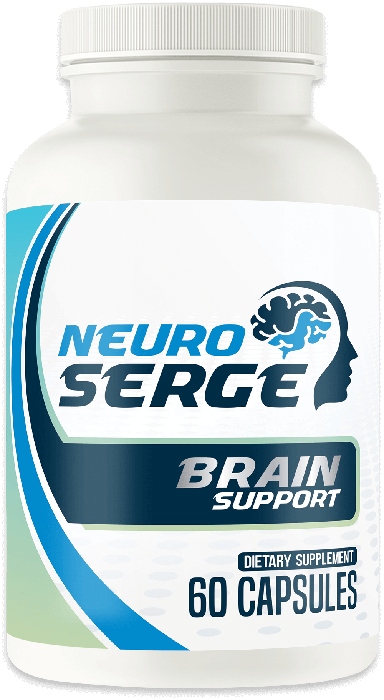
Introduction & What Is Neuro Serge?
Neuro Serge is a 60-capsule dietary supplement marketed for memory, mental clarity and long-term cognitive health. The manufacturer states more than 20 plants and nutrients across two proprietary blends, of which six are named: olive leaf extract, cinnamomum cassia, deglycyrrhizinated licorice, green tea extract, grape seed extract and bilberry extract. A single bottle is listed at $49 against a stated regular price of $632, with a 180-day money-back guarantee.
Read that ingredient list again if you know this category. Olive leaf, cassia cinnamon, green tea, grape seed and bilberry are not the botanicals that appear in brain formulas. They are the botanicals that appear in blood sugar and circulation formulas. The ingredients with the most cognitive research behind them, bacopa monnieri and ginkgo biloba above all, are not among the named ingredients at all. That is an unusual thing to notice on a bottle that says "Brain Support" in large letters, and it turns out to have an explanation.
This review is therefore less about weighing an ingredient list than usual, and more about documenting what the vendor's own published materials show. Everything below can be verified without buying anything, and most of it comes from pages the company wrote for its affiliates rather than for its customers. That distinction matters, because the two documents say noticeably different things.
Below: what the formula actually appears to be, what the official marketing claims versus what the affiliate materials claim, the ingredient evidence, the pricing structure, and what the research supports. Disclosure, as on every page of this site: we are independent reviewers, and purchases through our links may earn us a commission at no additional cost to you.
How Does It Work?
The stated mechanism is reasonable on its face: support healthy circulation and a healthy inflammatory response, and the brain, which is metabolically demanding and dependent on perfusion, benefits. The vascular contribution to cognitive decline is a real research area, and so is the relationship between metabolic health and brain health. Blood sugar dysregulation genuinely is associated with cognitive outcomes over time, which means a formula aimed at metabolic health is not an absurd thing to point at a brain.
But that reasoning has to be labeled precisely, because it is doing a lot of work here. "Metabolic health is associated with long-term cognitive outcomes in population research" is a supported statement. "Therefore this capsule of metabolic botanicals improves your memory" is not an inference the evidence permits. The first is epidemiology about decades; the second is a product claim about weeks. No trial has tested whether any of these ingredients changes cognitive performance in humans, and no trial has tested the finished formula at all.
The marketing's actual mechanism, in the materials the company sends its affiliates, is different and stranger: a sticky "neuro sludge" said to be choking brain cells and erasing memories overnight, hiding in three common foods. This is not a description of anything in the scientific literature. There is no such compound, no research group studying it, and no mechanism by which a capsule would remove it. It is a story invented to make a video watchable, and it is worth stating plainly that it corresponds to nothing.
What This Formula Appears to Actually Be
Four independent observations point the same direction, and none requires a purchase to check.
The ingredients are blood sugar ingredients. Cassia cinnamon is one of the most common blood sugar botanicals on the market. Olive leaf, green tea, grape seed and bilberry are standard metabolic and circulatory inclusions. Bilberry is most associated with eye health. Not one named ingredient is a botanical with a meaningful cognitive research base.
The bonuses are blood sugar guides. The two digital bonuses included with larger orders are titled "Balance Your Blood Sugar Blueprint: Transform Your Health in 21 Days" and "The Blood Sugar Solution: Unlocking Your Weight Loss and Wellness". Both are about blood sugar. Neither is about the brain. These are the free gifts the company chose to attach to a memory supplement.
The affiliate terms name the same brand ambassadors as a blood sugar product. Neuro Serge's affiliate terms forbid affiliates from misrepresenting themselves as "brand ambassadors (Tony Bailey, Molly Leavitt)". The affiliate terms for Gluco6, a blood sugar supplement we have also reviewed, name the identical pair: Tony Bailey and Molly Leavitt. The same two people are the official faces of both products.
The pattern repeats across the category. We found the same thing while reviewing NeuroEnergizer, an unrelated brainwave audio product, whose official affiliate page supplies a suggested keyword list consisting entirely of blood sugar and diabetes terms. Whatever else is going on, blood sugar funnels are being re-skinned as brain products across this corner of the marketplace.
The most parsimonious reading is that Neuro Serge is a metabolic formula wearing brain-support branding, from an operation that also sells the blood sugar version. That is not illegal and it is not, by itself, evidence that the capsules contain anything harmful. It is, however, the single most useful thing a prospective buyer can know, because it means the product was not formulated to address the problem it is being sold for. Our Gluco6 review covers the blood sugar version from the same operation.
Two Sets of Claims, One Product
| What the customer-facing page says | What the affiliate email swipes say |
|---|---|
| "Supports memory, mental clarity, and long-term cognitive health" | "STOP memory loss in 21 days" |
| "Supports healthy brain function, a healthy inflammatory response, and healthy circulation" | "restore razor-sharp memory within 21 days" |
| "Sharper memory and focus" | "Take this 8-letter dementia test here (it can SAVE you from Alzheimer's)" |
| Structure-function language throughout | "If you fail? You have a 97% chance of losing your memory in 2026" |
| No named researchers | "MIT scientists", "Harvard neurologists are SHOCKED", "According to 127 studies" |
| No disease claims | "this canned food KILLS brain cells", "LEAKED: MIT Footage" |
The left column is careful and legal. Structure-function claims are what dietary supplements are permitted to make, and the product page stays within them.
The right column is the company's own official affiliate material, written by the vendor and supplied to affiliates to send to their email lists. It claims to stop memory loss, to restore memory in 21 days, to save readers from Alzheimer's, and to predict a 97 percent chance of memory loss from a word test. Those are disease claims about dementia. No dietary supplement has evidence supporting any of them, and the FDA's framework does not permit them.
The affiliate page that hosts these swipes advertises, in its own list of selling points to affiliates, "Compliance-first Positioning For Long-term Scaling". That phrase appears on the same page as an email telling seniors that a word test predicts their Alzheimer's risk at 97 percent. We report that without further comment because none is needed.
The MIT and Harvard attributions deserve a plain statement: no such research exists. There is no MIT study of 1,720 seniors and butter, no leaked MIT footage about neuro sludge, and no Harvard finding about arctic butter ending memory decline. These are institution names borrowed to lend authority to claims that have none.
Core Ingredients Analysis
| Ingredient | What it is usually used for | Cognitive evidence |
|---|---|---|
| Cinnamomum cassia | Blood sugar. The cheaper cinnamon species. | None for cognition. Contains coumarin, which carries documented liver concerns at higher regular intakes, unlike Ceylon cinnamon. |
| Olive leaf extract | Blood pressure and metabolic markers. | Small studies on blood pressure; no cognitive outcome evidence. |
| Green tea extract | Metabolic markers, antioxidant. | Not established for cognition. Liver injury documented in rare cases at higher doses. |
| Grape seed extract | Antioxidant, circulation. | Preliminary; largely lab and animal work as far as cognition goes. |
| Bilberry extract | Eye health, most commonly. | No cognitive outcome evidence. |
| DGL licorice | Digestive comfort. | No cognitive outcome evidence. The DGL form removes the compound that raises blood pressure, which is a sensible formulation choice. |
| 14+ undisclosed ingredients | Not named publicly. | Cannot be evaluated. This is most of the stated formula. |
| Notably absent | Bacopa, ginkgo, lion's mane, phosphatidylserine | The botanicals with the most cognitive research are not among the named ingredients. |
The conclusion writes itself. Not one named ingredient has clinical evidence for cognitive outcomes in humans, and the absence of the ingredients that do have such evidence is the most telling thing on the list. A formula assembled to support memory would start with bacopa, whose small randomized trials are the best the category has. This one starts with cinnamon.
The doses are undisclosed in any case, since both blends are proprietary, and more than 14 of the stated ingredients are not even named. So even the metabolic evidence that does exist for these botanicals in their own domain cannot be checked against what is in the capsule.
Safety notes, which matter here. Cassia cinnamon contains coumarin, and regular intake at higher levels has documented liver toxicity concerns; this is the species-specific issue that makes Ceylon cinnamon the preferred form in products that disclose which one they use. Green tea extract has its own documented liver injury association in concentrated form. Olive leaf may affect blood pressure and blood sugar, which matters for anyone on medication for either. Because most ingredients are undisclosed, a complete interaction check is not possible, which is a real problem in a product marketed to adults over 60 who typically take several prescriptions.
Real User Benefits & Drawbacks
Pros
- 180-day money-back guarantee, among the longest available, processed through ClickBank rather than at the vendor's discretion.
- The DGL form of licorice is the safer choice and suggests someone in the formulation process was paying attention.
- The product page itself stays within legal structure-function language, unlike the affiliate materials.
- Stimulant-free, so it is unlikely to disturb sleep.
- Real retail infrastructure: established checkout, published shipping and support terms.
Cons
- The formula appears to be a blood sugar product with brain branding, on the evidence of its ingredients, its bonuses and its shared brand ambassadors with Gluco6.
- No named ingredient has cognitive evidence in humans, and the ones that do have it are absent.
- The vendor's own affiliate emails make dementia and Alzheimer's claims that no supplement can support.
- MIT and Harvard are cited for research that does not exist.
- Two proprietary blends with more than 14 ingredients not even named.
- A $632 reference price against a $49 offer, which is anchoring rather than pricing.
- A $344 average order value advertised to affiliates, meaning the real cost is set by an upsell sequence, not the $49.
Pricing, Packages & Refund Policy
A single bottle of 60 capsules is listed at $49, presented against a stated regular price of $632. Larger packages lower the per-bottle price, and the 3-bottle and 6-bottle orders include the two blood sugar bonus guides and free shipping. Confirm live pricing at checkout.
Two figures deserve neutral statement. The $632 reference price is a number the product is not sold at and, as far as we can determine, never has been. Its function is to make $49 feel like a rescue.
The second figure is more useful, and it comes from the vendor's own affiliate page rather than its sales page. Neuro Serge advertises to affiliates an average order value of $344, alongside "High AOV With Upsells" and a "High-value Upsell Flow". A $49 front-end product with a $344 average order value means the typical buyer does not pay $49. They pay roughly seven times that, through the upsell sequence after checkout. That is not hidden, exactly, but it is disclosed to affiliates rather than to customers, and a shopper reading "$49" should know what the company tells its partners the real number is.
The stated refund policy is a 180-day money-back guarantee, processed through ClickBank's standard retail support. Six months is genuinely long, the refund does not depend on the vendor's cooperation, and it should cover the upsells purchased in the same order. Keep the order confirmation email.
How It Compares to the Alternatives
Against an actual brain formula: if the goal is a botanical memory supplement, the products that at least contain the researched ingredients are a better starting point. Our review of NeuroPrime covers a formula built on bacopa and ginkgo, which have real if mixed evidence. That product has its own problems, and it is still formulated for the thing it is sold for, which is more than can be said here.
Against standalone bacopa: the single ingredient with the best cognitive trial record is available on its own at a standardized dose for a few dollars a month. It is absent from this bottle entirely.
Against the blood sugar version: if the metabolic angle is genuinely the appeal, the same operation sells Gluco6, which is at least honest about being a blood sugar product. Our Gluco6 review is not favourable either, but a buyer would at least be buying a product whose formula matches its purpose.
Against what actually protects the aging brain: blood pressure control, physical activity, sleep, hearing, social engagement and managing metabolic health where it is a genuine problem. The metabolic link the marketing gestures at is real, and the way to act on it is to manage blood sugar with a doctor, not to take botanicals branded as a brain product. For everyday forgetfulness in context, see our article on why you might be so forgetful lately.
What the Independent Research Actually Says
The absent ingredient is the informative one. The botanical with the best cognitive record is bacopa, and this PubMed search on bacopa and memory shows both the modest signal and its limits. It is not in this formula, which is the clearest evidence of what this formula was assembled to be.
The cassia coumarin issue is documented. The NIH's complementary health center's cinnamon page covers the difference between cassia and Ceylon and the coumarin concern, which is the reason the species named on this label is worth noticing.
Green tea extract and the liver. The NCCIH's green tea page documents the rare liver injury cases associated with concentrated extract. In a product with undisclosed dosing, this is an unknown rather than a known-low risk.
What actually protects cognition. The NIH's aging institute maintains a plain-language summary of cognitive health in older adults: blood pressure, activity, sleep, hearing, social engagement. This is where the evidence is, and none of it is for sale.
When memory concerns need a doctor. The Alzheimer's Association's page on memory loss concerns covers the difference between normal forgetfulness and changes warranting evaluation. It is the correct response to the fear the affiliate emails are engineered to produce.
The regulatory frame. Neuro Serge is regulated as food under the FDA's dietary supplement framework: no pre-market efficacy review, proprietary blends permitted, and disease claims not permitted. The last of those is worth holding against the affiliate emails.
What to Expect: A Realistic Timeline
- Weeks 1–3: The affiliate emails promise restored memory in 21 days. Nothing in this formula has a demonstrated mechanism that would change cognition on any timescale, let alone this one. Any early impression is expectation.
- Weeks 4–12: If a reader is evaluating this at all, the honest instrument is something countable, written down: names recalled, appointments missed, list items. Impressions are unreliable in exactly the population being targeted, because worry about memory distorts the perception of memory.
- Months 4–6: The refund window runs to 180 days, so there is ample time to reach a conclusion and act on it. If tracked numbers have not moved, the capsules are not moving them.
Throughout, the rule that matters more than the timeline: new or worsening memory problems are a medical matter, urgently so if family members have started noticing. The practical harm of a supplement in that situation is not the money. It is the six months.
Who the Evidence Applies To, and Who Should Avoid It
There is no population for whom this product's evidence applies, and in this case the reason is unusually stark. It is not merely that the finished formula is untested, which is true of most of this category. It is that the named ingredients have no cognitive evidence at all, and the ingredients that do have cognitive evidence are not in it. A product cannot be evaluated for a purpose it was not built for.
The audience is precisely identified in the company's own materials: the affiliate page states the offer converts with men and women 35 and over in the health audience, and the email swipes are written for people over 60 who are frightened about their memory. That targeting is the part of this that troubles us most. The emails do not merely oversell a product. They tell a 70-year-old that a word test predicts a 97 percent chance of losing their memory, that a food in their pantry is killing brain cells, and that MIT has leaked footage proving it. Every one of those statements is invented, and every one is aimed at someone whose fear is real and whose family may already be worried. Manufacturing dementia terror to sell $49 capsules with a $344 average order value is a choice, and it is the choice that sets this rating.
Several groups should be specifically careful. Anyone with liver concerns, or on medication metabolized by the liver, should note both the cassia cinnamon's coumarin content and the green tea extract, neither of which is disclosed by amount. Anyone on blood pressure or diabetes medication should note the olive leaf and the cinnamon, both of which can affect the things those drugs are managing. And anyone whose pharmacist would like to check interactions is blocked by the same wall as everyone else: more than 14 ingredients are not named.
And the group for whom this is most clearly the wrong tool: anyone whose memory concerns could have a reversible cause. B12 deficiency, thyroid disease, depression, sleep apnea and medication side effects all produce cognitive symptoms, all are identifiable with an ordinary workup, and several improve substantially once addressed. That is an outcome no botanical blend has demonstrated, and it is the outcome the affiliate emails are steering people away from by telling them their neurologist does not know about the arctic butter.
Frequently Asked Questions
What is Neuro Serge?
A 60-capsule supplement marketed for memory and cognitive support, stating 20-plus ingredients in two proprietary blends, of which six are named: olive leaf, cassia cinnamon, DGL licorice, green tea, grape seed and bilberry. It is not a medication.
Why do its ingredients look like a blood sugar formula?
Because they are the ingredients typically found in one, and the botanicals with the most cognitive research, such as bacopa and ginkgo, are absent. Both included bonus guides are about blood sugar, and the affiliate terms name the same two brand ambassadors as the blood sugar supplement Gluco6.
What does the marketing claim?
The product page keeps to legal structure-function language. The vendor's own affiliate emails claim to stop memory loss in 21 days, offer an 8-letter dementia test predicting a 97 percent chance of memory loss, and cite MIT and Harvard research that does not exist. Those are disease claims no supplement can support.
Are the doses disclosed?
No. Two proprietary blends, with more than 14 of the stated ingredients not named at all, so the formula cannot be compared against research on its own contents.
What is the pricing and refund policy?
$49 for one bottle against a stated $632 regular price, with a 180-day money-back guarantee through ClickBank. Note the vendor advertises a $344 average order value to affiliates, reflecting an upsell sequence after checkout.
Final Verdict: Is Neuro Serge a Scam or Legit?
Neuro Serge ships a real product, through a real retailer, with a 180-day refund route that works independently of the seller. Its own product page stays within legal language, its licorice is the safer DGL form, and a buyer who wants their money back has six months to ask. Those facts are why this is not rated at the floor.
Everything else points one way. The named ingredients are blood sugar and circulation botanicals with no cognitive evidence in humans, and the ingredients that do have cognitive evidence are absent from the bottle. Both bonus guides are about blood sugar. The affiliate terms name the same two brand ambassadors as Gluco6, a blood sugar supplement. The most parsimonious explanation, that this is a metabolic formula wearing brain branding, is also the only one that accounts for all four observations, and it means the product was not formulated for the problem it is sold for.
Then there are the emails the company writes for its affiliates, which are the reason this review exists in the form it does. They claim to stop memory loss in 21 days. They offer an 8-letter test that supposedly predicts a 97 percent chance of losing your memory. They attribute invented findings to MIT and Harvard, describe a "neuro sludge" that exists nowhere in the literature, and tell readers their neurologist does not know about it. They are aimed at people over 60 who are frightened, and they appear on a page that advertises "Compliance-first Positioning" to affiliates in the next column over. A $49 front-end price with a $344 average order value completes the picture of what this operation is optimized for.
The evidence-supported sequence is the one those emails are designed to prevent: a medical evaluation for any memory change that worries you or your family, because B12, thyroid, medication effects, depression and sleep apnea are findable and often reversible; then blood pressure, activity, sleep and hearing, where the real data live; and if metabolic health is genuinely the concern, managing it with a doctor rather than through botanicals branded as a brain product.
Our rating: 3.5/5. That is the floor of our scale: we do not publish a score below 3.5 (see how we rate), and this product sits there alongside the worst conduct we have documented, because it fails on both disqualifying grounds in their most serious form: research attributed to MIT and Harvard that those institutions never produced, and Alzheimer's fear manufactured to sell capsules to people over 60. Credited for a long refund window that functions, a legal product page and real retail infrastructure; docked severely for a formula that appears to be a blood sugar product rebranded for the brain, no cognitive evidence behind any named ingredient and the absence of the ones that have it, undisclosed dosing across two blends with most ingredients unnamed, a reference price the product has never sold at, an upsell structure disclosed to affiliates rather than customers, and official marketing materials that manufacture Alzheimer's fear with fabricated research to sell capsules to the people least able to afford the delay.