
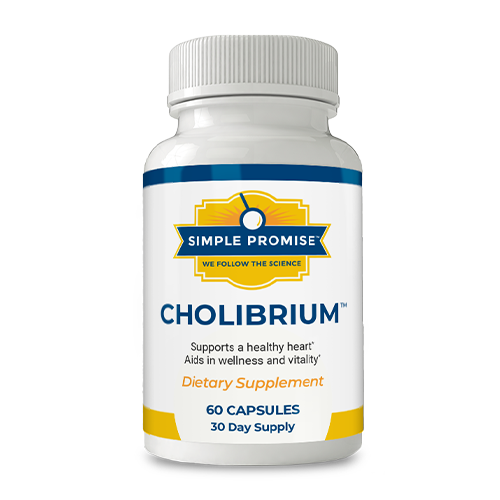
Introduction & What Is Cholibrium?
Cholesterol is the rare health topic where the evidence is unusually mature: decades of large trials, clear guidelines, well-understood medications, and a food-based intervention (soluble fiber) with real numbers behind it. That maturity makes the supplement aisle's offerings easier to evaluate than usual, because there is a serious benchmark to measure against.
Cholibrium, from Simple Promise, enters that space with an unusual angle: instead of the category-standard red yeast rice or plant sterols, it is built on a blend of ten functional mushrooms, reishi, lion's mane, cordyceps, maitake, shiitake, turkey tail, chaga and others, positioned around their beta-glucan content and traditional use in wellness practices. Two capsules daily, taken before a meal.
The product targets adults watching their cholesterol numbers, often those who dislike or cannot tolerate statins, and those drawn to the functional-mushroom category generally. Simple Promise positions it as cardiovascular support through mushroom-derived compounds rather than as a treatment for high cholesterol, and that boundary carries real weight here: cholesterol management is a medical matter with established treatment, and the consequences of substituting an unproven product are not hypothetical.
Below: the mechanism examined honestly, the ingredient evidence, pros and cons, pricing with the unusually long refund window, and what to expect. Disclosure, as on every page of this site: we are independent reviewers, and purchases through our links may earn us a commission at no additional cost to you.
How Does It Work?
Cholibrium's proposed mechanism centers on beta-glucans, a class of soluble fiber found in mushroom cell walls. This is where the story is genuinely interesting, and where it needs the most careful handling.
Soluble fiber's effect on cholesterol is well established. It binds bile acids in the gut, prompting the liver to pull cholesterol from circulation to make more, which lowers LDL. This is why oats and barley carry authorized health claims, and it is real physiology, not a hypothesis. Beta-glucans are the specific fiber responsible in oats.
Here is the honest catch, and it is the central issue with this entire product category. The established cholesterol effect requires roughly 3 grams of beta-glucan per day, which is why the food claims specify servings of oatmeal or barley. A capsule supplement, even a well-made one, typically delivers a fraction of that: two capsules can physically hold only so much material, and mushroom powder is not pure beta-glucan. The mechanism Cholibrium invokes is real; whether the delivered dose can engage it is a separate question the marketing does not answer, and one the undisclosed per-capsule amounts make impossible to verify before purchase.
Mushroom research beyond fiber is legitimate but early: reishi and others have been studied for immune markers and, in some small studies, lipid parameters, with inconsistent results. The finished Cholibrium formula has no independent trials. And high cholesterol is asymptomatic, meaning you cannot feel whether anything is working; only a lipid panel can tell you, which is the one honest measuring instrument in this entire discussion.
Core Ingredients Analysis
| Ingredient | What the manufacturer includes it for | Evidence snapshot |
|---|---|---|
| Beta-glucans (across the blend) | The formula's cholesterol rationale, soluble fiber. | Established LDL effect at roughly 3g/day from foods; capsule doses are typically far lower and undisclosed here. |
| Reishi | Traditional wellness mushroom for cardiovascular support. | Small studies on lipids and immune markers; a Cochrane review found insufficient evidence for cardiovascular risk factors. |
| Lion's mane | Popular functional mushroom, included for general wellness. | Studied mainly for cognition and nerve growth factor; no meaningful cholesterol evidence. |
| Cordyceps | Traditional energy and endurance mushroom. | Small exercise-performance studies; cholesterol data limited. |
| Maitake & shiitake | Culinary mushrooms with beta-glucan content. | Some animal and small human lipid studies; findings preliminary and inconsistent. |
| Turkey tail, chaga & others | Broaden the blend's polysaccharide profile. | Mostly immune-marker research; cardiovascular outcome data essentially absent. |
What stands out positively: the ingredients are named and identifiable, the beta-glucan rationale connects to real, well-understood physiology rather than invention, and functional mushrooms are a legitimate research area rather than a fringe one.
What deserves scrutiny: the gap between the mechanism invoked and the dose delivered is the whole question, and undisclosed per-ingredient amounts leave it unanswerable. Several mushrooms in the blend (lion's mane, cordyceps, turkey tail) have no meaningful cholesterol research at all; their presence broadens the label more than the evidence.
Safety notes: mushroom supplements are generally well tolerated, with digestive upset the most common report. Reishi may affect blood clotting and interact with anticoagulants and blood pressure medication. Anyone on cholesterol medication, or with a diagnosed lipid disorder, should talk to their doctor before adding this, and should never adjust prescribed medication based on a supplement. For a related metabolic topic, see our article on how to lower blood sugar naturally.
Real User Benefits & Drawbacks
Pros
- The beta-glucan rationale connects to real, established physiology, soluble fiber's cholesterol effect is not in doubt.
- Named mushroom ingredients from a legitimate research area, with no mystery blend framing.
- 365-day money-back guarantee, the longest window we have encountered, processed through ClickBank.
- Clear dosing instructions (two capsules before a meal) rather than vague guidance.
Cons
- Dose is the whole question and it is undisclosed; capsules typically deliver a fraction of the roughly 3g/day beta-glucan associated with cholesterol effects.
- Several mushrooms in the blend have no cholesterol research, they broaden the label, not the evidence.
- No independent trials of the finished formula; Cochrane found insufficient evidence for reishi on cardiovascular risk factors.
- Cholesterol is invisible without a blood test, so nothing here can be self-assessed by feel.
Pricing, Packages & Refund Policy
Cholibrium is sold in single, 3-bottle and 6-bottle packages through the official Simple Promise website. At the time of writing, a single bottle (a 30-day supply) is listed at a promotional price near $59 against a stated regular price around $99, with bundles bringing the per-bottle price toward $49 and lower on the largest package. Shipping terms vary; confirm live figures on the official page.
The refund policy is the product's most distinctive commercial feature: a stated 365-day money-back guarantee, processed through ClickBank's standard retail support. That window is long enough to cover several lipid panels, which is the only way to evaluate this product honestly. Keep the order confirmation email.
How It Compares to the Alternatives
Against oats and barley: this is the comparison the beta-glucan mechanism invites, and it is unflattering. A bowl of oatmeal delivers grams of the exact fiber Cholibrium's rationale rests on, at pennies, with an authorized health claim behind it. Anyone attracted to the mechanism can engage it at breakfast tomorrow.
Against psyllium and plant sterols: both are cheap, widely available, and have clearer LDL data than any mushroom blend. Psyllium delivers soluble fiber at effective doses; sterols have their own body of evidence. Either is a better-evidenced supplement choice for cholesterol specifically.
Against red yeast rice: the category's most-studied supplement contains monacolin K, chemically identical to lovastatin, which is exactly why it carries statin-like risks and regulatory complications. It has more evidence than mushrooms and more reason for medical supervision.
Against statins: for people whose cardiovascular risk warrants treatment, statins have large-trial evidence for preventing heart attacks and strokes, an outcome no supplement has ever demonstrated. That is a conversation for a doctor, and side effects that make statins unpleasant for some people are also a conversation for a doctor, since alternatives and dose adjustments exist.
What the Independent Research Actually Says
Start with the numbers that matter. The National Heart, Lung, and Blood Institute's guide to blood cholesterol is the vendor-free baseline: what the values mean, what raises risk, and what the established interventions are.
The fiber mechanism, properly sized. Soluble fiber's LDL effect is real and dose-dependent; this PubMed search on beta-glucan and LDL shows the meta-analyses, and the gram-level doses they required.
Reishi's cardiovascular record. A Cochrane review examined Ganoderma lucidum (reishi) for cardiovascular risk factors and found the evidence insufficient to support its use, the single most relevant independent assessment for this product's premise.
Functional mushrooms generally. The NIH's complementary-health center maintains a measured overview of mushrooms and what is and is not known about them.
The regulatory frame. Cholibrium is regulated as food under the FDA's dietary supplement framework, with no pre-market efficacy review, which is why the year-long refund route weighs meaningfully in our verdict.
The wider context. Readers arriving here because of a lipid panel may get more from understanding the numbers themselves than from any formula. Our guide to cholesterol numbers, LDL, HDL and triglycerides covers what each measure means, why levels rise, and which interventions have evidence behind them.
What to Expect: A Realistic Timeline
- Weeks 1–4: Nothing to perceive. High cholesterol has no symptoms, so any felt "improvement" in this window is unrelated to lipids.
- Weeks 6–12: The interval over which a lipid panel can meaningfully change with a real intervention. If you are testing this product, this is when a repeat panel makes sense, and only if you have a baseline panel to compare against.
- Months 3–12: The 365-day window means you can evaluate across two or three panels, which is the only honest way to judge anything in this category. Numbers decide; impressions cannot.
Throughout: never adjust prescribed cholesterol medication because of a supplement, and take any chest pain, breathlessness or new cardiac symptom to a doctor immediately rather than to a bottle.
Who the Evidence Applies To, and Who Should Avoid It
The beta-glucan cholesterol research, the strongest science this product's premise touches, was conducted with oats and barley, in adults with elevated cholesterol, delivering roughly 3 grams of soluble fiber daily over weeks. That is a food-based intervention studied at a food-based dose. The findings describe what happens when someone eats a substantial serving of a specific fiber every day. Whether they describe two capsules of mushroom powder is the open question this review keeps returning to, and the undisclosed label means it stays open.
The reishi research is closer to the product but weaker in what it shows. The Cochrane review that examined it for cardiovascular risk factors found the available trials small, of limited quality, and insufficient to support use for that purpose. Cochrane reviews are the closest thing evidence-based medicine has to a neutral referee, and when one concludes that evidence is insufficient, that conclusion is itself informative rather than merely cautious.
Certain groups need medical input before taking this. Reishi can affect platelet function, which matters for anyone on warfarin, direct oral anticoagulants or antiplatelet therapy, and for anyone approaching surgery. It may also amplify blood-pressure-lowering medication. People with mushroom allergies have an obvious route to trouble. Pregnant and nursing women are outside all of the underlying research. And anyone on immunosuppressive therapy, after a transplant, for autoimmune disease, should discuss immune-modulating mushroom products with the physician managing that therapy, since the whole premise of the category is immune activity.
The most important group, though, is defined by risk rather than by ingredient interaction. If your cholesterol is elevated enough that a doctor has recommended treatment, or if you have already had a cardiac event, then you are in the population where statins have demonstrated reductions in heart attacks and strokes across very large trials. Substituting an untested mushroom blend for a treatment with that evidence base is a decision with real consequences, and it is not one a sales page is qualified to inform. If statin side effects are the reason for looking elsewhere, that is a legitimate problem with legitimate medical solutions: dose adjustment, a different agent, or alternative drug classes all exist, and a doctor can navigate them.
Frequently Asked Questions
What is Cholibrium?
A daily capsule from Simple Promise built on a blend of functional mushrooms including reishi, lion's mane, cordyceps, maitake, shiitake and turkey tail, marketed for cardiovascular support. It is a supplement, not a medication.
Does Cholibrium lower cholesterol?
Mushroom beta-glucans are soluble fiber, which has established LDL effects at roughly 3 grams per day from foods. Capsules typically deliver far less, doses here are undisclosed, and the finished formula is untested, so the available evidence is insufficient to conclude it lowers cholesterol.
Can it replace a statin?
No. Statins have large-trial evidence for reducing cardiovascular events that no supplement approaches. Changing prescribed medication is a decision for a doctor alone.
How do you take it?
Two capsules daily, roughly 20 to 30 minutes before a meal with a glass of water, or as advised by a healthcare provider.
Where is it sold and what is the refund policy?
Through the official Simple Promise website with ClickBank checkout and a stated 365-day money-back guarantee processed through ClickBank's retail support.
Final Verdict: Is Cholibrium a Scam or Legit?
Cholibrium is structurally legitimate: named ingredients, clear dosing instructions, ClickBank checkout, and a 365-day refund route independent of the vendor, the longest guarantee we have encountered. Its beta-glucan rationale connects to genuine, well-understood physiology rather than to invention, which is more than much of this category can say.
The central problem is arithmetic. The cholesterol effect the product's premise borrows requires gram-level soluble fiber doses that two capsules are unlikely to deliver, the amounts are undisclosed, and Cochrane's assessment of reishi for cardiovascular risk factors found the evidence insufficient. Several mushrooms in the blend have no cholesterol research at all. The evidence-supported sequence is unchanged: a lipid panel and a doctor's risk assessment first; diet, activity and soluble fiber from food next; prescribed medication where risk warrants it; and only then, optionally, a product like this as an unproven addition judged by blood tests rather than by feel, which the year-long window at least makes possible.
Our rating: 3.8/5. Credited for a mechanism grounded in real physiology, named ingredients and an exceptional refund window; docked for undisclosed doses in a question that is entirely about dose, blend members with no relevant evidence, and no product-level trials.