
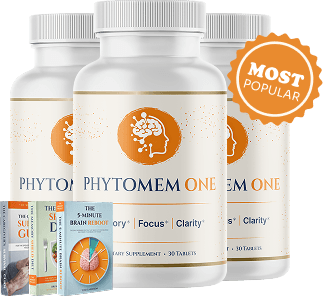
Introduction & What Is Phytomem One?
Most memory supplements reach for the same shelf of botanicals: bacopa, ginkgo, lion's mane. Phytomem One takes a different route, and it is the most interesting thing about it. Its formula is built around metabolic ingredients, berberine, Ceylon cinnamon, saffron extract, olive leaf extract and fucoxanthin, on the premise that the aging brain's problem is fuel: that insulin resistance and glucose dysregulation are what dull memory over time.
That premise connects to a genuine research conversation. Population studies consistently link type 2 diabetes and poor glucose control with higher rates of cognitive decline, and some researchers informally describe brain insulin resistance in Alzheimer's research as "type 3 diabetes." Two clarifications belong on page one, though. First, "type 3 diabetes" is not a recognized clinical diagnosis; it is a research shorthand, and the marketing's confident use of it outruns its status. Second, an association between glucose control and cognition does not establish that a supplement nudging glucose markers will protect memory. That link has never been demonstrated.
Phytomem One targets adults over 50 noticing word-finding trouble and forgetfulness, particularly those who suspect a metabolic component. The manufacturer positions it as nutritional support for brain health rather than a treatment, and that boundary is where this review applies its pressure.
Below: the ingredient evidence, the metabolic premise examined honestly, pros and cons, pricing with refund terms, and a realistic timeline. Disclosure, as on every page of this site: we are independent reviewers, and purchases through our links may earn us a commission at no additional cost to you.
How Does It Work?
The proposed chain has three links. First, glucose metabolism support: berberine and Ceylon cinnamon are included for their studied effects on blood sugar markers. Second, the AMPK pathway: berberine activates AMPK, an enzyme often described as a metabolic master switch, which is real biochemistry and one of the more legitimate mechanistic claims in this category. Third, the leap: that better metabolic signaling translates into better memory.
The first two links have support. The third is the one the product's entire proposition rests on, and it is where the evidence stops. Berberine's AMPK activity is documented; its glucose effects have meta-analyses behind them, with variable study quality. But no trial has shown that berberine, or this formula, improves cognition in people. The mechanism is plausible, and plausibility is not a clinical outcome. This is precisely the kind of gap where supplement marketing usually plants its flag, and Phytomem One is no exception.
Saffron is the ingredient with the most direct cognitive research here: several small randomized trials have examined saffron extract in mild cognitive impairment and mood, with modest positive signals. They are small, short, and mostly conducted with specific standardized extracts at specific doses. Olive leaf extract and fucoxanthin have preliminary lab and animal work in metabolic contexts, with essentially no human cognitive outcome data.
The honest summary: the metabolic-brain connection is a legitimate research field, berberine and saffron are the two ingredients with real supporting studies, the leap from glucose markers to memory remains unproven, and the finished formula has no independent trials. Memory changes also have medical causes worth diagnosing, which no capsule can do.
Core Ingredients Analysis
| Ingredient | What the manufacturer includes it for | Evidence snapshot |
|---|---|---|
| Berberine | Glucose metabolism and AMPK activation. | Meta-analyses report effects on glucose markers; documented AMPK activity; no human cognitive outcome data; significant drug interactions. |
| Saffron extract | The formula's most direct cognitive ingredient. | Small randomized trials in mild cognitive impairment and mood show modest signals; short and preliminary. |
| Ceylon cinnamon | Blood sugar support, chosen over cassia for safety. | Small, inconsistent glucose effects; Ceylon is the correct choice, as cassia carries coumarin liver concerns. |
| Olive leaf extract | Polyphenol support for metabolic health. | Preliminary lab and small human work on blood pressure and glucose; no cognitive outcome data. |
| Fucoxanthin | Algae carotenoid studied in metabolic research. | Mostly animal studies; human evidence sparse and early. |
What stands out positively: choosing Ceylon cinnamon over the cheaper cassia is a real quality decision, cassia's coumarin content is a genuine liver concern at higher intakes, and it signals a formulator paying attention. Berberine and saffron are also the two most defensible ingredients anyone could pick for this particular thesis.
What deserves scrutiny: doses are undisclosed, and that is decisive here. Berberine's glucose research uses gram-level daily doses split across meals; saffron's trials used standardized extracts at specific milligram amounts. A capsule delivering token quantities would carry the associations without the substance, and there is no way to check before purchase.
Safety notes: berberine interacts with a long list of medications, notably metformin and other glucose-lowering drugs, and combining them without supervision can push blood sugar too low; it is inappropriate during pregnancy. Anyone with diabetes should treat this as a conversation with their doctor rather than a self-directed experiment. For the broader metabolic picture, see our article on how to lower blood sugar naturally, and for everyday forgetfulness in context, why you might be so forgetful lately.
Real User Benefits & Drawbacks
Pros
- A differentiated, research-connected thesis: the metabolic-brain link is a legitimate field rather than an invention.
- Berberine and saffron are the two most defensible ingredients available for this premise, both with real studies.
- Ceylon cinnamon over cassia is a genuine quality and safety decision.
- 60-day money-back guarantee processed through ClickBank's retail system.
Cons
- The central leap is unproven: no trial shows that improving glucose markers with a supplement protects memory.
- "Type 3 diabetes" is presented with more certainty than its research-shorthand status warrants.
- Doses undisclosed, decisive for berberine and saffron, whose evidence is entirely dose-specific.
- Berberine's drug interactions are significant and the marketing does not foreground them.
Pricing, Packages & Refund Policy
Phytomem One is sold in starter, advanced and ultimate packages (1, 3 and 6 bottles) through the official website only. At the time of writing, single-bottle pricing sits near $67 to $99 depending on the promotion, with bundles bringing the per-bottle price down substantially. Shipping terms vary by package; confirm live figures on the official page, since ClickBank offers change frequently.
For scale: berberine's glucose trials generally ran 8 to 12 weeks with divided daily dosing, and saffron's cognitive studies ran comparable lengths. A fair personal test spans two to three bottles rather than one.
The stated refund policy is a 60-day money-back guarantee on purchases through the official website, processed through ClickBank's standard retail support. Keep the order confirmation email.
How It Compares to the Alternatives
Against standalone berberine or saffron: both are available individually at doses matching their studies, for less money and with the dosing transparency this blend lacks. If either ingredient's research is the appeal, buying it directly is the rational test, with a doctor's input for berberine given the interactions.
Against actually managing blood sugar: if the metabolic thesis is what persuades you, the interventions with real evidence are the unglamorous ones: dietary pattern, activity, weight management, and where indicated, medication. They move glucose markers far more than any capsule, and they are the version of this thesis that has been tested.
Against other memory formulas: most of the shelf, including our reviewed NeuroPrime, is built on the bacopa-and-ginkgo chassis. Phytomem One is genuinely different, which is a point in its favor for anyone who has already tried the standard formula and wants a different hypothesis, though "different" and "proven" are not the same thing.
Against medical evaluation: a doctor can check B12, thyroid, medications, mood and sleep, several of which cause reversible memory problems, and can also check the glucose markers this product is premised on. That last point is worth sitting with: if metabolic health is the concern, it is measurable, and measuring beats guessing.
What the Independent Research Actually Says
The metabolic-cognition link, from a neutral source. The NIH's aging institute maintains an evidence-based overview of what causes Alzheimer's disease, including the vascular and metabolic risk factors this product's thesis draws on, and the uncertainty that still surrounds them.
Berberine's actual record. This PubMed search on berberine and glucose shows the meta-analyses that support its metabolic effects, and the study-quality caveats that accompany them. Note the absence of cognitive outcome trials.
Saffron's small signal. The formula's most cognition-relevant ingredient has genuine studies; see this PubMed search on saffron and cognition, keeping the small samples and short durations in view.
Diabetes and cognitive risk. The NIH's diabetes institute covers the documented relationships between diabetes and its complications, useful for sizing the real association this product borrows.
The regulatory frame. Phytomem One is regulated as food under the FDA's dietary supplement framework, with no pre-market efficacy review, which is why the refund route matters in our verdict.
The wider context. The formula's logic runs from blood sugar to memory, and that link is worth examining on its own terms. Our guide to blood sugar and brain health covers what the research supports, what "type 3 diabetes" actually means, and where the leap from glucose effect to brain benefit breaks down.
What to Expect: A Realistic Timeline
- Weeks 1–2: Nothing measurable, in either glucose markers or memory. Anything felt this early is expectation.
- Weeks 3–8: The window where berberine's glucose studies ran, and only if the delivered dose approaches the studied one, which the label does not confirm. If you have baseline blood work, a repeat panel here is the one objective read available.
- Weeks 9–12: Fair-verdict territory. Track something countable on the memory side, names, list items, missed appointments, and check the glucose numbers on the metabolic side. The 60-day refund window closes inside this period, so a baseline test taken before starting is what makes an evidence-based decision possible.
Throughout: any new, worsening or life-disrupting memory change is a medical matter first, and anyone taking glucose-lowering medication should not add berberine without a doctor's involvement.
Who the Evidence Applies To, and Who Should Avoid It
This formula's two research-backed ingredients were studied in different populations for different outcomes, and neither population is quite the one the sales page addresses. Berberine's trials enrolled adults with type 2 diabetes or metabolic syndrome, using roughly 1,500 milligrams daily split across meals for 8 to 12 weeks, and measured glucose markers. Not memory. Saffron's cognitive trials enrolled smaller groups, sometimes people with mild cognitive impairment, sometimes healthy adults, using standardized extracts at specific milligram doses, and measured cognitive scores over comparable periods. Neither study design tested the product's actual thesis, which is that moving the first thing improves the second.
That leaves a specific applicability question worth stating plainly. If you have measured insulin resistance or prediabetes, you are at least in the population where berberine's glucose research applies, and you also have a doctor, a diagnosis and a set of interventions with far better evidence than any capsule. If your glucose is normal, the metabolic premise has no purchase on your situation at all, and the formula's rationale is addressing a problem you do not have.
Berberine's interaction profile is the most serious safety matter in this review, and it deserves more prominence than the marketing gives it. It inhibits CYP450 enzymes that metabolize many prescription drugs, altering their levels. Combined with metformin, sulfonylureas or insulin, it can push blood sugar too low, and hypoglycemia is a genuine clinical event rather than an abstract caution. It is contraindicated in pregnancy, with concerns raised about neonatal jaundice. Anyone on any prescription medication should treat this as a pharmacist or physician conversation rather than a purchase decision. Saffron at high doses has its own cautions and can interact with antidepressants.
The group for whom this product is the wrong response is the same as in every memory formula we have reviewed, and the reason bears repeating rather than being buried. Memory change that is new, worsening, or noticed by the people around you is a diagnostic question. B12 deficiency, thyroid disease, depression, sleep apnea and medication effects all cause cognitive symptoms and all are identifiable. Several of them substantially improve once treated, which is more than the entire supplement category has demonstrated.
Frequently Asked Questions
What is Phytomem One?
A daily capsule marketed for memory and cognitive support, built around metabolic ingredients including berberine, Ceylon cinnamon, saffron extract, olive leaf extract and fucoxanthin. It is a supplement, not a medication.
Does Phytomem One improve memory?
Saffron has small preliminary cognitive trials and berberine has glucose research, but those studies tested single ingredients at specific doses, and the finished formula is untested. The available evidence is insufficient to conclude it improves memory.
Is "type 3 diabetes" a real diagnosis?
No. It is an informal research term describing insulin resistance observed in the brain in Alzheimer's research. It is not a recognized clinical diagnosis, and the area remains under active investigation.
How does blood sugar relate to brain health?
Population research links type 2 diabetes and poor glucose control with higher rates of cognitive decline. That association does not establish that a supplement affecting glucose markers protects memory, which has not been demonstrated.
Where is it sold and what is the refund policy?
Through the official website with ClickBank checkout and a stated 60-day money-back guarantee processed through ClickBank's retail support.
Final Verdict: Is Phytomem One a Scam or Legit?
Phytomem One is structurally legitimate and, unusually, intellectually interesting: it is built on a real research conversation rather than a recycled botanical list, it picks the two ingredients (berberine and saffron) that best fit its thesis, and choosing Ceylon cinnamon over cassia is a quality decision most formulators skip. It is sold through ClickBank with a 60-day refund route independent of the vendor.
The thesis still contains an unbridged gap. Glucose control correlates with cognition; that is real. No evidence shows that a supplement moving glucose markers protects memory; that is the leap, and the marketing makes it with a confidence, including the "type 3 diabetes" framing, that the research does not authorize. Undisclosed doses make even the credible ingredients unverifiable, and berberine's drug interactions deserve more prominence than they get. The evidence-supported sequence is unchanged: medical evaluation for concerning memory changes; measured glucose markers if the metabolic thesis interests you, since guessing is unnecessary when testing exists; diet, activity and blood pressure control, where the strongest data live; and only then, optionally, a formula like this as an unproven addition judged by numbers rather than by feel.
Our rating: 3.9/5. Credited for a differentiated research-connected premise, well-chosen ingredients and a real quality decision on cinnamon; docked for an unproven central leap, an overstated diagnostic framing, undisclosed dosing, and underplayed interaction risks.