
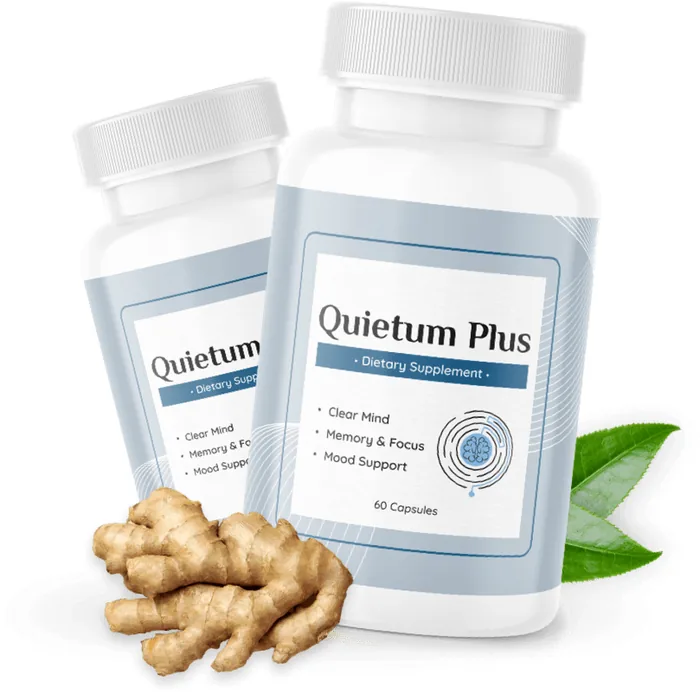
Introduction & What Is Quietum Plus?
Quietum Plus is a capsule marketed for hearing health and tinnitus, sold as a proprietary formula of 18 plant extracts plus vitamins A and B and zinc. The sales page frames it as addressing the underlying cause of hearing problems rather than masking symptoms.
Hearing is a category where the stakes are specific. Sudden sensorineural hearing loss is a medical emergency where treatment outcomes depend heavily on how quickly it starts. One-sided tinnitus can indicate a tumour on the hearing nerve. Age-related hearing loss is associated with social isolation and, in observational research, with cognitive decline, and it is treatable with devices that work. Time spent on an ineffective product in this category is not neutral.
The ingredient list here is the finding. Read carefully, it is not a hearing formula. It is, almost item for item, the standard composition of a men's libido supplement. That observation drives most of what follows. Disclosure, as on every page of this site: we are independent reviewers, and purchases through our links may earn us a commission at no additional cost to you.
How Does It Work?
The mechanism is described in non-technical terms. Hearing problems are attributed to damage in "a 'wire' that carries electrical signals and sounds from your ear cells to your brain networks," and the solution offered is to "feed, regenerate and rebuild it."
The auditory nerve is real, and its role is described roughly correctly. What follows does not match how hearing loss is understood.
Most hearing loss is not nerve damage. The dominant cause of sensorineural hearing loss is damage to the hair cells of the cochlea, the sensory cells that convert vibration into neural signals. Noise exposure, ageing, ototoxic medications and some illnesses damage these cells, and the damage accumulates.
The relevant biology is why they do not come back. Birds and fish regenerate cochlear hair cells. Mammals do not. This is one of the more studied problems in hearing research, with laboratory work on gene therapy and progenitor cells, and it is precisely because mammalian hair cells do not regenerate that most sensorineural hearing loss is permanent. No oral supplement has been shown to regenerate them.
Tinnitus is generated centrally. The current understanding is that tinnitus commonly follows reduced input from a damaged cochlea, with the auditory pathways in the brain increasing their gain in response and generating perceived sound. This is why it often accompanies hearing loss and why treatments target the brain's response rather than the ear.
"Feed, regenerate and rebuild" describes something that would be a major medical advance if it worked, and it is offered without any specific claim about how.
Core Ingredients Analysis
Eighteen plant extracts are grouped in pairs on the page, with vitamins and amino acids. No dose is published for any of them, and no supplement facts panel appears in the materials.
Set out plainly, here is what the formula contains.
| Ingredient | What it is primarily used for commercially | Hearing evidence |
|---|---|---|
| Epimedium | Sold as horny goat weed. Male sexual function. | None. |
| Tribulus terrestris | Marketed for testosterone and libido. | None. |
| Muira puama | Traditional aphrodisiac, sometimes called potency wood. | None. |
| Catuaba | Traditional Brazilian aphrodisiac. | None. |
| Damiana | Traditional aphrodisiac. | None. |
| Maca root | Libido and energy. | None. |
| Mucuna pruriens | Contains L-dopa. Sold for mood, libido and dopamine support. | None. |
| Dong quai | Women's hormonal health. | None. The page calls it a "superior ear tonic." |
| Ashwagandha | Adaptogen for stress. | None directly. Stress can worsen tinnitus perception. |
| L-arginine | Nitric oxide, circulation, erectile function. | None. |
| Zinc | Mineral. | The one plausible inclusion. Some tinnitus trials, results mixed, mainly where deficiency exists. |
| Vitamins A and B | Micronutrients. | Deficiency can affect hearing. Supplementation in non-deficient people is not established. |
The pattern is hard to unsee. Epimedium, tribulus, muira puama, catuaba, damiana, maca, mucuna and L-arginine are the standard components of male sexual-enhancement formulas. They appear together on those products routinely. Assembled here, they are described as ear tonics, nerve regenerators and auditory support.
We are not asserting that this is a rebranded libido product, because we cannot see behind the label. We are reporting that the composition matches that category closely, that we found no hearing research for any of these botanicals, and that the descriptions attached to them on this page ("superior ear tonic," "could assist in improving auditory acuity") do not correspond to any literature we could locate.
Zinc deserves fair treatment as the one defensible inclusion. Zinc has been studied for tinnitus, with mixed results, and the more consistent signal appears in people who are actually zinc-deficient. It is a reasonable ingredient in a hearing formula. Its amount is not published, which for a mineral with a defined daily value is the number that would settle whether it is meaningful. Excess zinc over time also interferes with copper absorption, which is why the amount matters in both directions.
Safety notes. Several ingredients here carry real considerations. Mucuna pruriens contains L-dopa and can interact significantly with Parkinson's medication and MAO inhibitors. Dong quai has anticoagulant effects and interacts with warfarin. Epimedium may affect blood pressure and interact with cardiovascular medication. Tribulus has been associated with case reports of liver and kidney effects. Ashwagandha has been associated with rare liver injury and affects thyroid hormone levels. Ginger and dong quai together add to bleeding risk. None of these appears as a warning on the page, and with no doses published, none can be quantified.
The Claims, Checked
| Claim as published | What can be verified |
|---|---|
| Hearing problems come from a damaged "wire" that can be fed, regenerated and rebuilt | Most sensorineural hearing loss involves cochlear hair cells, which do not regenerate in mammals. This is why such loss is generally permanent. No supplement has been shown to regenerate them. |
| "Addresses the real cause of your problems" | The causes of hearing loss are well characterized and include noise exposure, ageing, ototoxic medication and disease. No supplement addresses them. |
| Dong quai is a "superior ear tonic" | We found no research supporting an auditory role for dong quai. |
| "Supported by several dozen studies" | No studies are named or cited anywhere on the page. |
| "Manufactured in an FDA-approved facility" | The FDA registers and inspects facilities. It does not approve them, and it does not approve dietary supplements for safety or efficacy before marketing. |
| 18 plant extracts in a proprietary formula | Named, with no individual doses and no blend total. |
Real User Benefits & Drawbacks
Pros
- All ingredients are named rather than hidden behind a blend name alone.
- Zinc is a defensible inclusion with some tinnitus research behind it.
- A 60-day money-back guarantee, stated as no-questions-asked and valid regardless of bottles used.
- ClickBank is the retailer, so refunds are processed by a third party.
- The page uses hedged language ("may," "could," "potentially") for ingredient effects.
- It states plainly that specific outcomes cannot be guaranteed.
Cons
- The formula matches the composition of a men's libido supplement closely.
- We found no hearing research for any of the botanical ingredients.
- The regeneration mechanism contradicts why hearing loss is permanent.
- No dose for any ingredient, including zinc, and no blend total.
- "Supported by several dozen studies" with nothing cited.
- "FDA-approved facility" misdescribes what the FDA does.
- Serious interactions (mucuna with Parkinson's medication, dong quai with warfarin) are unflagged.
- No guidance to seek evaluation for sudden or one-sided symptoms.
Pricing, Packages & Refund Policy
The packages shown are two bottles at $158, three bottles at $207 against a $537 reference, and six bottles at $294 against a $1,074 reference, with a stated retail price of $109 per bottle. Shipping of $15.95 appears on the smaller options. Three bonus digital guides are included with larger packages, each carrying a stated retail value of $109.
The reference prices imply discounts of roughly 60 to 70 percent presented as a limited offer, which is standard in this category and best read as marketing rather than as prices the product has traded at. The bonus guides' combined stated value of $327 is likewise best valued at zero when weighing the purchase.
The refund term is 60 days, described as no-questions-asked and valid regardless of how many bottles have been used. ClickBank processes the transaction, so the route does not depend on the vendor.
One note on the arithmetic: the six-bottle package is a six-month supply against a 60-day refund window, so roughly two thirds of that purchase sits outside the period in which it can be returned.
How It Compares to the Alternatives
Against Audifort, which we have also reviewed, the comparison is unflattering in a specific way: that product at least assembles ingredients with some circulation and neurological rationale, whatever one makes of the evidence. Here the botanical list has no hearing literature at all.
Against what actually helps, the comparison is stark, and it is worth being concrete because these options are genuinely effective.
| Approach | What it addresses | Evidence position |
|---|---|---|
| Audiological assessment | Identifies type and degree of loss, detects treatable causes | The starting point. Establishes what is actually wrong. |
| Hearing aids | Amplification for sensorineural loss | Established and effective. Also frequently reduce tinnitus by restoring input. |
| Cochlear implants | Severe to profound loss | Established for appropriate candidates. |
| Tinnitus retraining and CBT | Distress and attention, not the sound itself | The best-supported approach for tinnitus burden. |
| Sound therapy or masking | Perception of tinnitus | Widely used, helpful for many people. |
| Hearing protection | Preventing further damage | The only thing that reliably preserves what remains. |
Hearing aids deserve emphasis because uptake remains low relative to need, and because they frequently help tinnitus as well as hearing, by restoring the input whose loss drives the central gain increase.
What the Independent Research Actually Says
On supplements for tinnitus. The evidence is consistently negative or inconclusive. Cochrane reviews of ginkgo biloba for tinnitus, the most studied supplement in this space, have not found evidence of benefit for tinnitus as a primary complaint. Zinc trials are mixed. The NIDCD's overview of tinnitus covers what is and is not supported.
On hair cell regeneration. An active research field in which mammalian cochlear hair cells do not regenerate spontaneously, which is the reason sensorineural hearing loss is permanent. Work on gene therapy and progenitor cell approaches is laboratory-stage.
On hearing loss and cognition. The National Institute on Aging's information on hearing loss covers the association between untreated hearing loss and social isolation and cognitive decline in older adults. This is a reason to treat hearing loss rather than to postpone treatment while trying supplements.
On the finished product. No clinical trial of Quietum Plus appears in the indexed literature, and the page's claim of support from "several dozen studies" names none of them.
What to Expect: A Realistic Timeline
Weeks one to four. Tinnitus fluctuates substantially on its own with sleep, stress, caffeine, alcohol and attention, which makes short-term self-assessment unreliable in both directions.
Months two and three. The 60-day refund window closes at around week eight. Placebo response in tinnitus research is notably large, which is exactly why the trials that count are placebo-controlled.
Beyond. The more important consideration is what happens meanwhile. Sudden sensorineural hearing loss has a treatment window measured in days to a few weeks, and outcomes depend on starting promptly. Time spent on a supplement during that window cannot be recovered.
Who Should Avoid It, and Who Should See a Doctor First
Sudden hearing loss in one or both ears is a medical emergency. It should be assessed within days, not weeks, because corticosteroid treatment is most effective when started early. This is the single most important sentence in this review.
Tinnitus in one ear only warrants evaluation. One-sided tinnitus or hearing loss can indicate an acoustic neuroma, a benign tumour on the hearing nerve, which is identified with imaging.
Also warranting prompt assessment: tinnitus with vertigo, tinnitus that pulses in time with the heartbeat, hearing loss with facial weakness or numbness, and any hearing change following head injury.
On the ingredients specifically: anyone taking Parkinson's medication or MAO inhibitors should avoid mucuna pruriens; anyone on warfarin or another anticoagulant should avoid dong quai and be cautious with ginger; anyone with thyroid disease should discuss ashwagandha with their doctor; and anyone with hormone-sensitive conditions should note that several of these botanicals have hormonal activity.
Frequently Asked Questions
What is actually in Quietum Plus?
Eighteen plant extracts plus vitamins A and B, zinc, L-tyrosine and L-arginine, with no dose published for any of them. The botanicals include epimedium, tribulus terrestris, muira puama, catuaba, damiana, maca, mucuna pruriens, dong quai, ashwagandha, ginger, sarsaparilla and asparagus. Most of these are ingredients commonly found in men's libido supplements, and we found no hearing research for any of them.
Can a supplement regenerate hearing?
No supplement has been shown to. Most sensorineural hearing loss involves damage to cochlear hair cells, and mammals do not regenerate these cells, which is the reason such loss is generally permanent. Regeneration is an active research field at laboratory stage, involving gene therapy and progenitor cell approaches rather than oral supplementation.
Do any supplements help tinnitus?
The evidence is consistently negative or inconclusive. Cochrane reviews of ginkgo biloba, the most studied supplement for tinnitus, have not found evidence of benefit when tinnitus is the primary complaint. Zinc trials are mixed, with a more consistent signal only in people who are zinc-deficient. The approaches with the best support are tinnitus retraining, cognitive behavioural therapy, sound therapy and hearing aids where hearing loss is present.
Are there interaction risks with these ingredients?
Several. Mucuna pruriens contains L-dopa and can interact significantly with Parkinson's medication and MAO inhibitors. Dong quai has anticoagulant effects and interacts with warfarin. Epimedium may affect blood pressure and cardiovascular medication. Ashwagandha affects thyroid hormone levels and has been associated with rare liver injury. None of these is flagged on the sales page, and no doses are published.
When should hearing symptoms be treated as urgent?
Sudden hearing loss in one or both ears is a medical emergency and should be assessed within days, since corticosteroid treatment is most effective started early. Tinnitus or hearing loss in one ear only warrants evaluation because it can indicate an acoustic neuroma. Tinnitus that pulses with the heartbeat, tinnitus with vertigo, and hearing change after head injury also need prompt assessment.
Final Verdict: Is Quietum Plus a Scam or Legit?
Quietum Plus is a real product that ships, sold through ClickBank with a 60-day no-questions-asked refund route that does not depend on the seller and is honoured regardless of bottles used. It names its ingredients rather than hiding them behind a blend name alone, it uses hedged language for ingredient effects, and it states plainly that specific outcomes cannot be guaranteed. Zinc is a defensible inclusion in a hearing formula.
The formula does not match the product. Epimedium, sold everywhere as horny goat weed. Tribulus terrestris, marketed for testosterone. Muira puama, catuaba and damiana, three traditional aphrodisiacs. Maca, mucuna pruriens and L-arginine. Assembled together, these are the standard composition of a men's sexual-enhancement supplement, and they are presented here as ear tonics and nerve regenerators. We could not locate hearing research for any of the botanicals in this formula, and descriptions such as dong quai being a "superior ear tonic" do not correspond to any literature we found.
The mechanism runs against the reason hearing loss is permanent. Most sensorineural loss involves cochlear hair cells, mammals do not regenerate them, and that fact is why the field's regeneration research exists at all. "Feed, regenerate and rebuild" describes an outcome that would be a landmark if achieved, offered with no account of how and with "several dozen studies" cited by number rather than by name.
What concerns us most is the omission rather than the claims. Sudden hearing loss is an emergency with a treatment window measured in days. One-sided tinnitus can indicate a tumour on the hearing nerve. Untreated hearing loss is associated with isolation and cognitive decline, and hearing aids work, frequently helping tinnitus as well by restoring the input whose loss drives it. None of this appears on a page selling to people with exactly these symptoms.
Our rating: 3.5/5. That is the floor of our scale: we do not publish a score below 3.5 (see how we rate), so where a product's conduct would otherwise rank lower, the specifics carry the weight instead of the number. Here they are. A hearing and tinnitus product is built on epimedium, tribulus terrestris, muira puama, catuaba, damiana, maca, mucuna and L-arginine, which is the composition of a men's libido formula, with no hearing research located for any of them and with dong quai described as a "superior ear tonic." The stated mechanism, feeding and rebuilding damaged nerve tissue to restore hearing, runs against the established reason sensorineural hearing loss is permanent. "Supported by several dozen studies" names none. And the page sells to an audience that includes people whose symptoms need urgent assessment without saying so. Credited for naming its ingredients, a legitimate zinc inclusion, hedged ingredient language, an explicit statement that outcomes cannot be guaranteed, and a functioning third-party refund route. Docked for the formula-to-purpose mismatch, the regeneration mechanism, no dose for any ingredient including zinc, uncited study claims, the "FDA approved" misdescription, unflagged interactions including mucuna with Parkinson's medication and dong quai with warfarin, and the absence of any direction to seek evaluation for sudden or one-sided symptoms.