
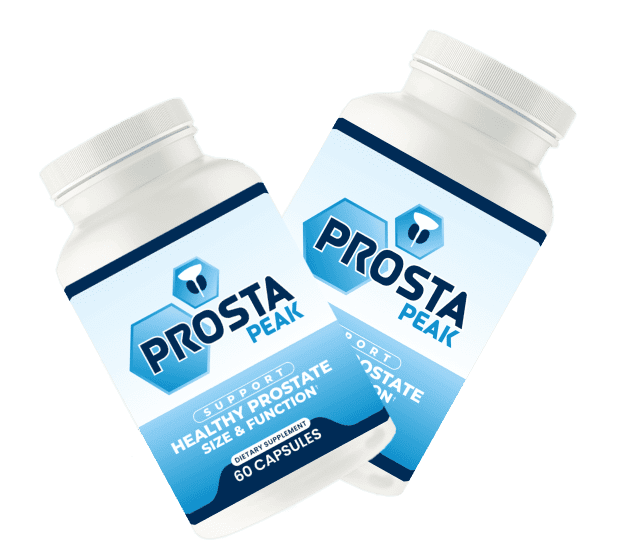
Introduction & What Is Prosta Peak?
Prosta Peak is a 60-capsule dietary supplement marketed for prostate and urinary support. The manufacturer states a proprietary blend of more than 20 ingredients, of which six are named: saw palmetto, pygeum, cat's claw, green tea extract, raspberry and soursop. Packages start at two bottles for $158, and the stated refund policy is a 180-day satisfaction guarantee.
Unlike some products in this category, the formula is at least pointed at the right target. Saw palmetto and pygeum are the two botanicals most associated with prostate health, and their presence means someone assembled this for the condition it is sold for. That is a lower bar than it sounds, and it is worth crediting where it is met.
The difficulty is what happened when those ingredients were tested. Saw palmetto is not an under-researched botanical whose potential remains open. It is one of the most rigorously studied supplements in existence, and the studies were large, well designed, publicly funded and unambiguous. That evidence is the centre of this review, and it is not favourable.
There is also a specific safety question here that does not arise in most of the products we cover, involving the soursop, and we address it directly rather than in a footnote. Below: the mechanism, the trial evidence, the safety question, what the vendor's own affiliate materials claim, and the pricing structure. Disclosure, as on every page of this site: we are independent reviewers, and purchases through our links may earn us a commission at no additional cost to you.
How Does It Work?
The proposed mechanism starts from real physiology. Benign prostatic hyperplasia is a genuine, common and well-characterized condition: the prostate enlarges with age, compresses the urethra, and produces the urinary symptoms most men over 50 eventually recognize. Weak stream, hesitancy, incomplete emptying and getting up at night are real, they are disruptive, and they are worth treating.
The botanical rationale is that saw palmetto may inhibit 5-alpha reductase, the enzyme that converts testosterone to dihydrotestosterone, which drives prostate growth. This is not a made-up mechanism. It is the same pathway that finasteride, a prescription BPH drug, acts on, and it is why saw palmetto was taken seriously enough to fund large trials in the first place.
That is exactly what makes the results so informative. A plausible mechanism, a well-defined condition, an objective outcome measure and public funding produced some of the best evidence in the entire supplement field. And the answer was no. The mechanism did not translate. This is worth sitting with, because it is a reminder that plausibility and effect are different things, and that this category's usual defence, that the research simply has not been done yet, is unavailable here. The research was done. It was done well. It came back negative.
The marketing's actual mechanism, in the materials the company supplies to affiliates, is something else entirely: a "prostatic plug" or "chemical plug" said to be clogging urine flow, dissolvable with a tonic. No such structure exists. BPH is tissue growth compressing a tube. There is no plug, nothing to dissolve, and no research describing one.
The Evidence on Saw Palmetto, Which Is the Point
Most supplement reviews end with "the evidence is insufficient". This one does not, and the difference matters.
The 2006 NEJM trial. A double-blind, placebo-controlled randomized trial of 225 men with moderate to severe BPH tested saw palmetto at 320mg daily for a year. It found no benefit over placebo on any primary or secondary outcome: not urinary symptom scores, not peak flow rate, not post-void residual volume, not prostate size, not quality of life.
The CAMUS trial. Researchers then asked whether the dose had been too low. This trial gave 369 men escalating doses, from 320mg up to 640mg and then 960mg daily, three times the standard dose. The symptom score improved by 2.20 points with saw palmetto and 2.99 points with placebo. Placebo did slightly better.
The 2012 Cochrane review. Pooling 32 randomized controlled trials in 5,666 men, the review concluded that saw palmetto, including at two and three times the usual dose, provides no improvement in urinary flow measures or prostate size in men with lower urinary tract symptoms consistent with BPH.
That is over 5,000 men across three decades of research, including dose escalation designed specifically to give the botanical its best chance. The conclusion is not that we need more data. The conclusion is that saw palmetto does not improve BPH symptoms beyond placebo, and this is one of the most decisively settled questions in the supplement literature.
Pygeum, the formula's other prostate botanical, has a friendlier Cochrane review suggesting modest benefit, but the trials behind it were small, old and methodologically weaker than the saw palmetto studies. Its evidence is best described as preliminary and not comparable in quality.
The placebo detail in CAMUS is worth naming, because it explains something. Placebo improved symptoms by nearly 3 points, which is a meaningful change. BPH symptoms fluctuate, and men who take something and pay attention do report improvement. That is a real and well-documented effect, and it is why testimonials for this category are abundant and why controlled trials matter more than they usually get credit for.
A Specific Safety Question: The Soursop
Soursop, also called graviola or Annona muricata, is the ingredient in this formula that we would most want a doctor to know about, and it is worth stating carefully rather than dramatically.
Soursop contains annonacin, an acetogenin that is among the more potent naturally occurring inhibitors of mitochondrial complex I. On the island of Guadeloupe, where soursop fruit and leaf tea are widely consumed, researchers documented an unusually high incidence of atypical parkinsonism and proposed annonacin exposure as the explanation. Rat studies and epidemiological work have both been used to support that hypothesis.
The honest state of the evidence: the French food safety agency reviewed it and judged the experimental data insufficient to conclude that human consumption of soursop caused the Guadeloupe cluster, while calling for further study of the potential risk. So this is an open safety question with a plausible mechanism and an epidemiological signal, not an established causal finding.
What makes it relevant here rather than academic is the combination of three facts. The dose is undisclosed, because the blend is proprietary. The product is intended for daily long-term use, which is the exposure pattern the concern is about. And the target buyer is a man over 50, an age group in which the neurological conditions in question become more common anyway. None of that means Prosta Peak will cause harm. It means the exposure cannot be assessed by the person taking it, and that is a reasonable thing to raise with a doctor before starting.
Other safety notes: green tea extract carries documented rare liver injury concerns in concentrated form. Saw palmetto is generally well tolerated in trials, and the CAMUS safety analysis is reassuring on that point. Because more than 14 of the stated ingredients are not named at all, a complete interaction check is not possible, which matters for a product aimed at men who are commonly taking blood pressure medication, anticoagulants or alpha-blockers.
Core Ingredients Analysis
| Ingredient | What it is included for | Evidence snapshot |
|---|---|---|
| Saw palmetto | The category's signature botanical. | Tested thoroughly and negative. Cochrane 2012: 32 trials, 5,666 men, no improvement in urinary flow or prostate size, including at triple dose. |
| Pygeum | Traditional BPH botanical. | A Cochrane review suggests modest benefit, but from small, old, methodologically weaker trials. Preliminary. |
| Cat's claw | Anti-inflammatory positioning. | Small studies on inflammatory markers. No prostate outcome evidence. |
| Green tea extract | Antioxidant. | No established BPH benefit. Rare liver injury documented in concentrated form. |
| Raspberry | Antioxidant, fruit inclusion. | No prostate outcome evidence. |
| Soursop (graviola) | Present without a stated prostate rationale. | No prostate outcome evidence. Contains annonacin; see the safety section above. |
| 14+ undisclosed ingredients | Not named publicly. | Cannot be evaluated. This is most of the stated formula. |
The pattern is that the two ingredients with any prostate research are the first two, one of which has been tested and failed and the other of which rests on weak trials. The remaining named ingredients have no prostate evidence, and one of them raises a safety question rather than offering a benefit. And the doses are undisclosed throughout, so even the pygeum evidence cannot be matched against what is in the capsule.
Two Sets of Claims, One Product
| What the customer-facing page says | What the affiliate email swipes say |
|---|---|
| "Supports healthy prostate" | "SHRINK prostate by 67% (5 days)" |
| "Supports urinary tract and inflammatory response health" | "It shrinks a swollen prostate by 92%" |
| "Natural formula, no stimulants, non-habit forming" | "2 drops SHRINK prostate by 64%" |
| Structure-function language throughout | "Some experts believe this will make prostate surgery obsolete" |
| No safety absolutes | "It's 100% safe... There are no side-effects... Backed by over 127 medical studies" |
| No named researchers | "New Oxford studies", "Harvard urologists just EXPOSED", "America's #1 urologist" |
The left column is legal. Structure-function claims are what supplements may make, and the product page stays inside them.
The right column is the vendor's own official affiliate material, written by the company for affiliates to send to their email lists. It offers three different percentages for prostate shrinkage (67, 64 and 92 percent) in three different emails, which is itself informative: real findings do not come in an assortment. It claims the approach is 100 percent safe with no side effects, promises men they will avoid catheters, and suggests experts believe prostate surgery will become obsolete. These are drug claims about a diagnosed medical condition, made for a product whose lead ingredient failed its trials.
The affiliate page hosting these emails lists, among its selling points to affiliates, "Compliance-first Positioning For Long-term Scaling".
One further detail worth recording. The same affiliate template, the same agency contact address, the same "Compliance-first Positioning" line and the same "127 medical studies" figure appear on the affiliate page for Neuro Serge, a brain supplement from the same operation. The number 127 is attached to arctic butter in one and to a panama water hack in the other. It is a template value, not a citation.
Real User Benefits & Drawbacks
Pros
- The formula is aimed at the right condition, with saw palmetto and pygeum rather than unrelated botanicals.
- 180-day money-back guarantee, processed through ClickBank rather than at the vendor's discretion.
- Saw palmetto is well tolerated; the CAMUS safety analysis found no significant toxicity, so the failure was efficacy rather than harm.
- Stimulant-free, which matters for a product taken by men who already sleep poorly.
- The product page itself stays within legal language.
Cons
- The lead ingredient has been tested and failed: 32 trials, 5,666 men, no benefit, including at triple dose.
- Soursop raises an open neurotoxicity question at an undisclosed dose in a product meant for daily long-term use.
- Proprietary blend with more than 14 of the stated ingredients not named at all.
- The vendor's affiliate emails make drug claims with three mutually inconsistent shrinkage percentages.
- "100% safe" and "no side-effects" are claims no product can make.
- A $329 average order value advertised to affiliates against a $158 entry price, meaning upsells set the real cost.
- Minimum purchase is two bottles, so the smallest possible order is $158.
Pricing, Packages & Refund Policy
Prosta Peak is sold in multi-bottle packages: 2 bottles at $158 plus shipping, 3 bottles at $207 with free shipping, and 6 bottles at $294 with free shipping. The 3-bottle and 6-bottle orders include two digital bonus guides, both about erectile function rather than the prostate. There is no single-bottle option, so the minimum spend is $158. Confirm live pricing at checkout.
The figure worth knowing comes from the vendor's affiliate page rather than its sales page: Prosta Peak advertises an average order value of $329 to affiliates, alongside "High AOV With Upsells" and a "High-value Upsell Flow". Against a $158 entry price, that means the typical buyer does not pay $158. The upsell sequence after checkout roughly doubles it. This is disclosed to affiliates rather than to customers, and a man deciding whether to spend $158 should know what the company tells its partners the real number is.
The stated refund policy is a 180-day 100% satisfaction guarantee, processed through ClickBank's standard retail support. Six months is genuinely long, it does not depend on the vendor's cooperation, and it should cover upsells bought in the same order. Keep the order confirmation email, since ClickBank processes refunds against the order number.
How It Compares to the Alternatives
Against a urologist: this is the comparison that matters most, and not only because of treatment. Urinary symptoms in men over 50 usually mean BPH, which is benign. But they can also mean prostate cancer, a stricture, an infection or bladder dysfunction, and those are distinguished by examination rather than by symptoms. The single strongest argument against self-treating this particular set of symptoms is that the symptoms themselves do not tell you which condition you have.
Against the medications that work: alpha-blockers such as tamsulosin typically improve symptoms within days to weeks, and 5-alpha reductase inhibitors such as finasteride genuinely do shrink the prostate over months. Both have been through the trials saw palmetto failed. Both have side effects worth discussing. The relevant point is that effective options exist, they are inexpensive, and they are prescribed after someone confirms what is actually going on.
Against other prostate supplements: the category is large and mostly built on saw palmetto, which means most of it rests on the same failed evidence. Our review of ProstaVive covers another product in this space, and our article on what prostate supplements actually do covers the category as a whole.
Against the free measures: for nighttime urination specifically, the interventions with reasonable support cost nothing: limiting fluids in the evening, reducing alcohol and caffeine, double voiding, and reviewing any diuretic timing with a doctor. Our articles on how to stop frequent urination at night and weak urine stream in men cover this ground.
What the Independent Research Actually Says
The saw palmetto verdict. The NIH's complementary health center maintains a review of the evidence in Spotlight on Saw Palmetto, summarizing why the best-designed trials found no benefit. Its companion saw palmetto page states the conclusion in plain language.
The dose-escalation trial itself. For readers who want the primary source, the CAMUS trial is published as Effect of increasing doses of saw palmetto extract on lower urinary tract symptoms. It is the study that ruled out "the dose was too low" as an explanation.
What BPH actually is and how it is treated. The NIH's diabetes and digestive institute maintains a plain-language guide to prostate enlargement, covering the condition, the diagnostic process and the treatments with evidence behind them.
The annonacin question. For the soursop safety issue, this PubMed search on annonacin and parkinsonism shows the research base: an epidemiological signal from Guadeloupe, supporting laboratory work, and an unresolved causal question.
The regulatory frame. Prosta Peak is regulated as food under the FDA's dietary supplement framework: no pre-market efficacy review, proprietary blends permitted, disease claims not permitted. The last of those is worth holding against the affiliate emails promising a 92 percent reduction in prostate size.
What to Expect: A Realistic Timeline
- Days 1–5: The affiliate emails promise restored flow in five days. Nothing in this formula has a demonstrated mechanism that acts on this timescale, and the lead ingredient has no demonstrated mechanism at all in humans.
- Weeks 2–8: This is where the CAMUS placebo effect lives. Symptoms fluctuate, attention amplifies perceived change, and nearly 3 points of improvement showed up in men taking nothing. Any self-assessment in this window is measuring that, which is why a symptom diary with counts (nighttime trips, not impressions) is the only honest instrument.
- Months 3–6: Fair-verdict territory and the refund window. If counted nighttime trips have not changed, the capsules are not changing them, and 180 days is long enough to know.
Two situations override this timeline entirely. Blood in the urine, inability to urinate, fever with urinary symptoms, or pain are reasons to seek care now rather than to start a supplement. And any new urinary symptom in a man over 50 deserves an evaluation before a purchase, because the symptom does not identify its own cause.
Who the Evidence Applies To, and Who Should Avoid It
The honest answer is that there is no population for whom this product's evidence supports use, and unusually, that conclusion does not rest on absent research. It rests on present research. Saw palmetto was given every advantage the field can give a botanical: a plausible mechanism, public funding, large samples, long durations, objective endpoints and a deliberate dose escalation to three times the standard amount. Across 32 trials and 5,666 men, it did not beat placebo. Pygeum's weaker evidence does not rescue a formula whose doses are undisclosed anyway, and no other named ingredient has prostate research at all.
The men this is marketed to are easy to picture, because the emails picture them explicitly: getting up three times a night, tired, worried about a catheter, worried about surgery, and being told by "America's #1 urologist" that their real problem is a plug that can be dissolved. That fear is being manufactured with some precision. The catheter appears in email after email, because it is the thing that frightens men in this situation most, and it is being used to sell capsules whose lead ingredient has failed the largest trials in its field. Meanwhile the actual medical path, an examination that rules out the things that are not BPH, and a medication that works within weeks if it is, is being framed as what you can avoid.
Several groups should be specifically careful. Anyone concerned about neurological risk, or with a family history of parkinsonian conditions, has a legitimate question about the soursop at an undisclosed dose for daily long-term use, and that question belongs with a doctor. Anyone with liver concerns should note the green tea extract. Anyone on an alpha-blocker, anticoagulant or blood pressure medication is in the familiar position that more than 14 ingredients are unnamed, so a pharmacist cannot complete an interaction check. And anyone monitoring PSA should tell their doctor what they are taking before the next test.
And the group for whom this is most clearly the wrong tool: any man with new or changing urinary symptoms who has not been examined. BPH is benign and common. Prostate cancer, strictures, infections and bladder dysfunction produce overlapping symptoms and are not benign. The symptoms cannot tell them apart, a supplement cannot tell them apart, and the months spent finding out whether the capsules help are months spent not finding out which one it is.
Frequently Asked Questions
What is Prosta Peak?
A 60-capsule supplement marketed for prostate and urinary support, stating a proprietary blend of 20-plus ingredients, of which six are named: saw palmetto, pygeum, cat's claw, green tea, raspberry and soursop. It is not a medication.
Does saw palmetto work for prostate symptoms?
It is the most rigorously tested botanical in this category and the results were negative. CAMUS gave 369 men up to 960mg daily with no benefit over placebo, and a 2012 Cochrane review of 32 trials in 5,666 men found no improvement in urinary flow or prostate size even at triple dose.
Is the soursop a concern?
It is worth a question to your doctor. Soursop contains annonacin, and researchers linked prolonged consumption to a cluster of atypical parkinsonism in Guadeloupe. The French food safety agency judged the evidence insufficient to conclude causation but called for further study. The dose here is undisclosed.
What does the vendor's marketing claim?
The product page stays within legal structure-function language. Its own affiliate emails claim prostate shrinkage of 67, 64 and 92 percent in different messages, state the approach is 100 percent safe with no side effects, and suggest experts believe it will make prostate surgery obsolete. No supplement has evidence for any of that.
What is the pricing and refund policy?
Two bottles for $158, three for $207, six for $294, with a 180-day satisfaction guarantee through ClickBank. The vendor advertises a $329 average order value to affiliates, reflecting an upsell sequence after checkout.
Final Verdict: Is Prosta Peak a Scam or Legit?
Prosta Peak ships a real product through a real retailer, with a 180-day refund route that works independently of the seller. Its formula is aimed at the condition it is sold for, its lead ingredient is well tolerated, and its product page stays within legal language. Those things are real and they set the floor for this rating.
What sets the ceiling is that the lead ingredient does not work, and we know this with more confidence than we know almost anything in the supplement field. Saw palmetto got the trials most botanicals never get: 32 randomized studies, 5,666 men, doses escalated to three times standard specifically to give it a fair chance, objective endpoints, public funding. Cochrane's conclusion was no improvement in urinary flow or prostate size. In CAMUS, placebo did marginally better. The usual defence for this category, that the science has not caught up, is simply not available here. The science caught up and the answer was no.
Around that sits everything else. Pygeum's supportive evidence comes from small, old, weak trials, and the doses are undisclosed anyway. More than 14 ingredients are not even named. The soursop carries an open neurotoxicity question, at an unknown dose, in a product designed for daily use by men in the age range where those conditions appear. And the vendor's own affiliate emails promise 67, 64 and 92 percent prostate shrinkage in three different messages, call the approach 100 percent safe with no side effects, invoke Oxford and Harvard for research that does not exist, and dangle catheters in front of frightened men, all on a page that advertises "Compliance-first Positioning" to affiliates. A $158 minimum against a $329 average order value completes the picture.
The evidence-supported sequence is short and it is the one the emails are built to prevent: see a doctor about urinary symptoms, because BPH is common and benign but the symptoms it shares with things that are not benign cannot be told apart without an examination. If it is BPH, the medications work, they work in weeks, and they went through the trials this ingredient failed. The free measures for nighttime urination are worth doing regardless. And the 180-day guarantee, if someone buys anyway, is a real protection that only helps people who remember to use it.
Our rating: 3.5/5. That is the floor of our scale: we do not publish a score below 3.5 (see how we rate), and this product sits there on both disqualifying grounds: invented statistics (three different shrinkage percentages across three emails, plus "100% safe" and "no side-effects") and reader risk, since urinary symptoms share their presentation with conditions that are not benign. Credited for a formula aimed at the right condition, a long functioning refund route, a well-tolerated lead ingredient and a legal product page. Docked severely for a lead ingredient decisively shown ineffective across 5,666 men, undisclosed dosing with most ingredients unnamed, an unresolved neurotoxicity question at an unknown dose, an upsell structure disclosed only to affiliates, and official marketing that manufactures catheter and surgery fear.