
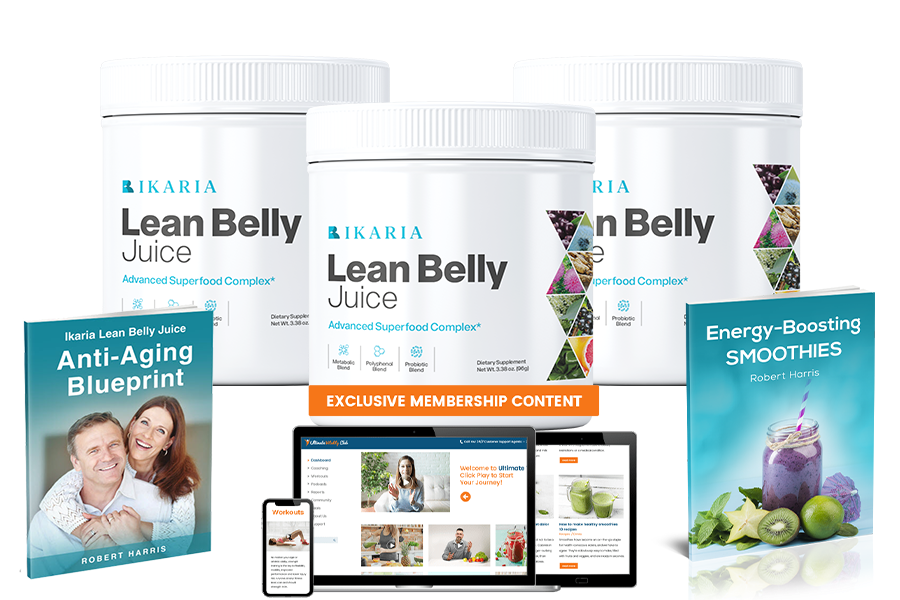
Introduction & What Is Ikaria Lean Belly Juice?
Ikaria Lean Belly Juice is a powdered supplement stirred into water each morning, sold for weight management. One scoop is roughly 3.2 grams. The label organizes its contents into three groups: a metabolic blend, a polyphenol blend and a probiotic blend, naming milk thistle, dandelion, panax ginseng, resveratrol, citrus pectin, EGCG from green tea, fucoxanthin from kelp and BioPerine, alongside a fruit powder blend of beetroot, hibiscus, strawberry, acai, African mango, black currant and blueberry.
The name borrows from Ikaria, a Greek island known in longevity research as one of the places where people live unusually long. That association is doing marketing work rather than scientific work. The dietary patterns studied on Ikaria involve vegetables, legumes, olive oil, wine in moderation, daily walking on hilly terrain and strong social ties. No powder was involved, and the research on those populations describes a way of living rather than an ingredient that can be jarred.
The product's actual hook is a claim about ceramides: that these compounds are the hidden root cause of stubborn belly fat, and that clearing them out releases the weight. That claim is the substance of this review, because it is specific enough to check. Ceramides are real, they appear in serious metabolic research, and what that research says is not what the sales page says.
Below: the ceramide claim examined against the literature, what the doses can and cannot be inside a 3.2 gram scoop, pros and cons, pricing with an unusually long refund window, and what the evidence supports. Disclosure, as on every page of this site: we are independent reviewers, and purchases through our links may earn us a commission at no additional cost to you.
How Does It Work?
The proposed mechanism has a real starting point. Ceramides are a class of lipid molecules, and there is a genuine and active body of metabolic research on them. Higher circulating ceramide levels are associated with insulin resistance, fatty liver and cardiovascular risk, and researchers study them as potential markers and possible contributors to metabolic dysfunction. A reader who looks up ceramides will find scientific papers, which is precisely why the ingredient works as a marketing device.
The problems begin at the first inference. The research describes an association, and the sales page converts it into a cause and a direction: ceramides make you fat, so remove them and the fat goes. The literature does not establish that. It is at least as consistent with the reverse, that metabolic dysfunction and excess adiposity raise ceramide levels, and the causal arrow remains an open question that active researchers are still working on. Presenting an unsettled question in metabolic science as a settled root cause is the central move here.
The second problem is the intervention. Even if ceramides were causal, nothing in this powder is established as lowering them in humans. There is no published trial showing that milk thistle, dandelion, acai or any other ingredient in this jar reduces circulating ceramides, let alone that doing so produces weight loss. The chain has three links, ceramides cause fat, this product lowers ceramides, therefore this product removes fat, and none of the three has been demonstrated.
What the powder is, stripped of the story, is a fruit and botanical blend with fiber, a small probiotic dose and some caffeine-adjacent polyphenols. That is not a worthless thing to drink. It is also not a mechanism, and there is nothing in it that acts on body weight in a way the research supports.
Core Ingredients Analysis
| Ingredient | Typical researched dose | Evidence snapshot |
|---|---|---|
| Fucoxanthin (kelp) | 2.4–8 mg daily in trials | The most interesting inclusion. A small number of human trials suggest modest effects on weight, mostly from one research group, often combined with pomegranate seed oil. Preliminary and not replicated widely. |
| EGCG (green tea) | 300–800 mg in trials | Studied for metabolic markers; weight effects are small and inconsistent. Doses above roughly 600mg daily carry documented liver injury concerns. |
| Resveratrol | 150–1000 mg in trials | Extensively studied, famously disappointing in humans. Poor bioavailability; weight effects not established. |
| Panax ginseng | 200–400 mg standardized | Studied for fatigue and cognition. No established weight loss effect. |
| Citrus pectin & inulin | Grams to have any effect | Soluble fibers with genuine, modest effects on satiety at gram-level doses. The most plausible contributors here, and the least exciting. |
| Milk thistle, dandelion | Varies | Traditional liver and diuretic botanicals. No weight loss outcome evidence. |
| Fruit powder blend | Not applicable | Acai, beetroot, hibiscus, berries. Contribute flavor, color and polyphenols. No weight loss evidence at powder quantities. |
| Probiotics | Strain-specific | Stated at 3 billion CFU, which is modest. Effects are strain-specific, and the strains are not disclosed. |
| BioPerine (black pepper) | 5–10 mg | Absorption enhancer, not an active ingredient. Fits easily. |
The arithmetic. A scoop is roughly 3.2 grams, which is more generous than a capsule and is the reason this product cannot be dismissed on dose grounds as quickly as a 500mg pill can. Fucoxanthin needs only single-digit milligrams and fits comfortably. BioPerine fits. The probiotic dose is stated.
But 3.2 grams has to cover everything: the fruit powders, the fiber, the flavoring that makes it drinkable, and every botanical extract. If citrus pectin and inulin are present at the gram-level doses where fiber actually affects satiety, they alone consume most of the scoop. If instead the botanical extracts are at researched levels, resveratrol and EGCG alone could take a gram between them, and there is little room left for anything to taste like juice. The blend cannot be generous in every direction at once, and the label does not say which direction it chose.
This is the practical cost of a proprietary blend, and here it is compounded: the brand does not publish a full Supplement Facts panel with per-ingredient amounts at all. A shopper cannot see what they are buying, and neither can a reviewer.
Safety notes: EGCG has documented liver injury concerns at higher doses, and because the amount here is undisclosed, that risk cannot be assessed rather than being known to be low. Green tea extract is the ingredient the NIH flags most often in this category. Panax ginseng can interact with anticoagulants and diabetes medication. Dandelion is a diuretic and may interact with lithium and some diuretics. Anyone on medication should check with a doctor or pharmacist, and the undisclosed dosing makes that conversation harder than it should be.
Real User Benefits & Drawbacks
Pros
- 180-day money-back guarantee, among the longest in the category, processed through ClickBank rather than the vendor.
- Fucoxanthin is a legitimate inclusion whose researched dose is small enough to plausibly be present at a meaningful level.
- Soluble fiber has real, modest satiety effects and could genuinely contribute if present at gram quantities.
- The powder format encourages drinking water in the morning, which is a small behavioral benefit that has nothing to do with the ingredients.
- All ingredients are named, even though the amounts are not.
Cons
- The ceramide premise is unestablished in all three of its links: causation, that the product lowers ceramides, and that lowering them causes weight loss.
- No full Supplement Facts panel published, which is worse than an ordinary proprietary blend.
- 3.2 grams cannot be generous in every direction, so most ingredients are present at unknown and likely token amounts.
- No independent trials of the finished formula.
- Undisclosed EGCG in a product with documented liver concerns at higher doses.
- The Ikaria name borrows longevity research that describes a way of living, not a supplement.
Pricing, Packages & Refund Policy
Ikaria Lean Belly Juice is sold through the official website. At the time of writing, a single pouch (a 30-day supply) is listed at $69, the 3-pouch package at $59 per pouch ($177), and the 6-pouch package at $39 per pouch ($234). The 3-pouch and 6-pouch packages are stated to include free shipping and three digital bonuses, which include an anti-aging guide, a smoothie recipe guide and access to a membership area. Confirm live pricing at checkout, since ClickBank offers change frequently.
The stated refund policy is a 180-day money-back guarantee on purchases through the official website, processed through ClickBank's standard retail support. Six months is at the long end of what this category offers, and it is a genuine consumer protection because the refund does not depend on the vendor's cooperation. Keep the order confirmation email, since ClickBank processes refunds against the order number.
How It Compares to the Alternatives
Against plain soluble fiber: the ingredients in this jar with the most plausible mechanism are the ones nobody advertises. Psyllium, inulin or citrus pectin are sold on their own, at gram doses, for a few dollars a month, and their modest satiety effects are better documented than anything the ceramide story proposes. If the fiber is what is working, the fiber is available directly.
Against fucoxanthin on its own: the formula's most interesting ingredient exists as a standalone supplement at a stated dose. Its evidence is preliminary and comes largely from a small body of work, but at least a buyer would know how much they were taking, which is not true here.
Against other ClickBank weight powders: the category is full of near-identical products with different stories bolted on. Our reviews of Liv Pure and Java Burn cover formulas with overlapping ingredients and entirely different root-cause narratives, which is itself informative. When three products share ingredients but disagree completely about the mechanism, the mechanism is not what is being sold.
Against the interventions with actual evidence: for weight management, the things with real support are dietary change sustained over time, physical activity, sleep, and for some people, prescription medications that have been through trials. None of that is as appealing as a morning juice, and all of it is better supported. Our article on why belly fat is so hard to lose covers why this particular fat is stubborn without attaching a product to the answer.
What the Independent Research Actually Says
The category verdict. The NIH Office of Dietary Supplements maintains a fact sheet on dietary supplements for weight loss summarizing the research on the most common ingredients. Its overall finding is that there is little scientific evidence that weight-loss supplements work, and it notes that the Government Accountability Office concluded little is known about their effectiveness while some have been associated with potential for physical harm.
The EGCG concern is documented. The NIH's complementary health center's page on green tea covers the liver injury cases associated with concentrated green tea extract. This is the reason undisclosed EGCG in a daily powder is a real gap rather than a pedantic one.
Fucoxanthin's actual record. For the formula's most promising ingredient, this PubMed search on fucoxanthin and weight loss shows how thin the human trial base is: a small number of studies, limited replication, and effects that are modest where they appear.
What weight management actually involves. The NIH's diabetes and digestive institute's weight management section covers the evidence-based ground, and for readers for whom it is relevant, its page on prescription medications for overweight and obesity describes options that have been through actual trials.
The regulatory frame. This product is regulated as food under the FDA's dietary supplement rules, and the agency's consumer guidance on dietary supplements explains what that does and does not mean: no pre-market approval, no efficacy review, and manufacturer responsibility for safety. It is why the 180-day refund window carries as much weight in our verdict as it does.
What to Expect: A Realistic Timeline
- Weeks 1–2: Any early change is most likely water weight, appetite effects from fiber, or the behavior change that comes with starting a morning routine. None of that is the ceramide mechanism, and none of it predicts anything about fat loss.
- Weeks 3–8: If a reader is evaluating this, the honest instrument is a scale used consistently at the same time of day, plus a waist measurement, recorded rather than remembered. It is also worth noting what else changed, because people who start a morning health ritual often change other things at the same time and credit the product.
- Weeks 9–24: The long refund window means there is time to reach a fair conclusion. If tracked numbers have not moved across several months, the powder is not moving them, and the 180-day term exists to be used.
One honest note about this timeline: the confound is unusually strong here. A person who buys a weight loss product, mixes it every morning and thinks about their weight daily is a person who has changed their behavior. If the scale moves, the powder gets the credit and the behavior did the work. That is not a reason to avoid the product, but it is a reason to be careful about what any personal result actually demonstrates.
Who the Evidence Applies To, and Who Should Avoid It
There is no population for whom this product's evidence applies, because there is no product-level evidence. What exists is ingredient-level research, mostly preliminary, at doses that are not disclosed. Fucoxanthin has a small and mildly interesting trial record. Soluble fiber has modest, real satiety effects at quantities that may or may not be in the scoop. Everything else in the jar is a fruit powder, a traditional botanical or a polyphenol whose weight loss evidence in humans does not exist or has not held up. That is the honest inventory.
The audience the marketing is built for is a specific one: people who have tried to lose weight repeatedly and not kept it off, and who are being offered an explanation for why it was never their fault. The ceramide story is emotionally well designed for that reader, because it says the failure was a hidden compound rather than anything they did or did not do. That framing is appealing precisely because dieting failure is so common and so demoralizing, and because the appeal has nothing to do with whether ceramides do what the page says.
Several groups should be careful. Anyone with liver concerns, or taking medication metabolized by the liver, should treat the undisclosed EGCG as a genuine unknown rather than a non-issue, because the concentrated form of this ingredient is the one the NIH flags. Anyone on anticoagulants or diabetes medication should note the panax ginseng. Anyone taking lithium or diuretics should note the dandelion. And anyone whose pharmacist would like to run an interaction check is out of luck, because there is no full panel to check against.
And a broader note for the reader this is aimed at. Belly fat that will not move is real, frustrating and often has boring causes: sleep debt, alcohol, a slow creep in portions, less activity than a decade ago, and for women, menopause redistributing fat regardless of behavior. Those explanations lack the appeal of a hidden compound, and they have the advantage of being true and, mostly, actionable. If any of this is genuinely worrying, a doctor can check the things that actually cause resistant weight gain, including thyroid function and medication effects. That is a step a morning juice cannot take.
Frequently Asked Questions
What is Ikaria Lean Belly Juice?
A powdered supplement mixed into water each morning, roughly 3.2 grams per scoop, containing three proprietary blends with milk thistle, dandelion, panax ginseng, resveratrol, citrus pectin, EGCG, fucoxanthin, BioPerine and a fruit powder blend. It is not a medication.
Do ceramides cause belly fat?
Ceramides are real, and higher levels are associated with insulin resistance in published research. The evidence does not establish that they cause fat gain, that this product lowers them, or that lowering them causes weight loss. The marketing presents an open question in metabolic science as a settled root cause.
Are the ingredient doses disclosed?
No. The brand does not publish a full Supplement Facts panel with per-ingredient amounts. A 3.2 gram scoop must also carry fiber, fruit powders and flavoring, so the botanical extracts cannot all be at researched doses.
Has it been clinically tested?
The finished formula does not appear in any published clinical trial. Some individual ingredients have their own preliminary research, at doses not disclosed here.
What is the refund policy?
A stated 180-day money-back guarantee, among the longest in the category, processed through ClickBank rather than at the vendor's discretion. Keep the order confirmation email.
Final Verdict: Is Ikaria Lean Belly Juice a Scam or Legit?
Ikaria Lean Belly Juice is a real product that ships, from an established seller, with ClickBank handling checkout and a 180-day refund route that does not depend on the vendor. Six months is a long window and a real protection, and it is the strongest thing on this page. The powder itself is a fruit and botanical blend with fiber and probiotics, which is a fine thing to drink and will not hurt most people.
The claim it is sold on does not survive examination. Ceramides are genuinely studied in metabolic research, which is what makes the story persuasive, and the research says something different from the sales page: an association whose causal direction is unresolved, not a root cause with a known fix. No published evidence shows that anything in this jar lowers ceramides in humans, and none shows that lowering them produces weight loss. The chain has three links and none of them is established. Underneath the story, the formula is undisclosed to an unusual degree, with no full Supplement Facts panel published at all, so a shopper cannot know whether the fucoxanthin is at a trial-level dose or whether the fiber is at a quantity that would do anything. The one thing in the jar with a plausible, boring mechanism is soluble fiber, which costs a few dollars a month on its own.
The evidence-supported ground has not moved: sustained dietary change, physical activity, adequate sleep, and prescription medication for those who qualify and want it, all of which have been tested in ways this powder has not. A doctor can also check the causes of stubborn weight gain that no supplement addresses. If someone wants to try this anyway, the 180-day window means the decision is reversible, which is more than most of this category offers, and it should be used rather than admired.
Our rating: 3.8/5. This sits at the bottom of our "real product, evidence thin" band (see how we rate). Credited for an exceptional 180-day refund window, a legitimate fucoxanthin inclusion, real fiber content, a format that is easy to sustain, and a mechanism that overstates real research rather than inventing it. Docked for a root-cause story whose three links are all unestablished, an unusual absence of any published dose panel, a scoop that cannot deliver researched doses across its whole label, and no product-level testing in a category the NIH describes as having little evidence that anything works.