
Introduction & What Is Arctic Blast?
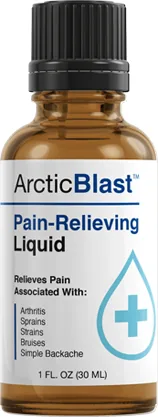
Arctic Blast is a topical liquid sold in a 1 fl oz (30 mL) dropper bottle for pain relief. The instruction is three to four drops applied to the affected area and massaged in, repeated multiple times a day. The bottle describes it as a "Pain-Relieving Liquid" that relieves pain associated with arthritis, sprains, strains, bruises and simple backache.
This product sits in a different position from most we review, and it deserves saying up front. Its lead ingredients are menthol and camphor, which are genuine topical analgesic actives with FDA over-the-counter monograph standing. They are not botanical hopefuls with thin trials attached. They work, in a limited and well-characterized way, and the mechanism is understood.
Two things complicate that. The sales page devotes two lengthy physician endorsements to DMSO, a compound that does not appear in its published ingredient list. And no concentrations are given for any active, which for this category is the number that determines both efficacy and safety. Disclosure, as on every page of this site: we are independent reviewers, and purchases through our links may earn us a commission at no additional cost to you.
How Does It Work?
The stated mechanism is accurate, which is unusual enough to note.
Menthol acts as a counter-irritant. Applied to skin it activates TRPM8 receptors, the same cold-sensing channels that respond to low temperature, producing a cooling sensation followed by warmth. That sensory input competes with pain signals from underlying tissue, and with repeated exposure the receptors desensitize. The page describes this correctly: "These feelings on the skin distract you from feeling the aches in your muscles and joints."
That is a fair description of counter-irritation, and it is worth appreciating what it does not claim. It does not say the product repairs tissue, reduces inflammation at depth, or addresses a cause. Counter-irritants modulate the perception of pain. The relief is real, and it is temporary and symptomatic.
Camphor works similarly through related pathways. Methyl salicylate, the active constituent of wintergreen oil, is a salicylate with both counter-irritant properties and some local anti-inflammatory action.
The language throughout is notably careful: "temporary relief for occasional aches and discomfort" appears repeatedly, which is the phrasing the OTC monograph framework uses. Compared with the products in this batch promising to reverse conditions, this is restrained, and the restraint appears deliberate.
The DMSO Question
This is the finding that shapes the review, so it is worth laying out precisely.
The sales page carries two extended physician endorsements. One, attributed to "Dr. James Mercola," states that "DMSO is absorbed directly through the skin for lightning-fast pain relief" and describes dramatic personal results. The second, attributed to Dr. Julian Whitaker, recommends DMSO for joint and muscle pain, describes it carrying other substances into deeper tissue, and calls it "remarkably safe and amazing."
Both quotes are about DMSO. Neither mentions Arctic Blast.
DMSO does not appear in the product's published ingredient list. The seven ingredients named on the page are menthol, camphor, aloe barbadensis, arnica montana, wintergreen oil, St. John's wort oil and calendula officinalis. Dimethyl sulfoxide is not among them.
We are reporting this as a discrepancy between two parts of the same page rather than inferring intent. There are several possible explanations: the formula may have changed while the endorsements remained, DMSO may be present without appearing in the list shown, or the quotes may be intended as general background on topical delivery. What we can say is what a reader encounters: substantial expert testimony about a compound, positioned within the sales page for a product whose ingredient list does not contain it.
Two further notes. DMSO is a genuinely interesting solvent with real transdermal carrier properties, and it is also the subject of longstanding regulatory caution: its only FDA approval for human use is for interstitial cystitis, and topical DMSO carries known effects including a characteristic garlic taste and odour, skin irritation, and the capacity to carry contaminants through the skin along with intended substances. "Remarkably safe" is a stronger characterization than the regulatory position supports. And the name given in the first quote, "Dr. James Mercola," differs from the well-known physician of a similar surname, which we note without drawing a conclusion.
Core Ingredients Analysis
Seven ingredients are named. No concentration is published for any of them, and no Drug Facts panel appears in the sales materials.
| Ingredient | Role | Standing |
|---|---|---|
| Menthol | Counter-irritant, TRPM8 activation | Recognized OTC external analgesic active. Monograph range 1.25 to 16 percent. |
| Camphor | Counter-irritant | Recognized OTC external analgesic active. Monograph range 3 to 11 percent. Toxic if ingested. |
| Wintergreen oil (methyl salicylate) | Counter-irritant and topical salicylate | Recognized OTC active. Monograph range 10 to 60 percent. Carries the most significant safety considerations here. |
| Arnica montana | Described on the page as moisturizing | Traditional topical use for bruising. Evidence mixed and generally low quality. |
| St. John's wort oil | Described as altering skin appearance | Topical use causes photosensitivity. |
| Aloe barbadensis | Moisturizing | Reasonable emollient. No analgesic role. |
| Calendula officinalis | Traditional wound and skin use | Limited evidence. No analgesic role. |
Why the missing concentrations matter more here than usual. In most supplement reviews an undisclosed dose means the efficacy question cannot be answered. In topical analgesics it means something additional: the concentration determines the safety margin as well.
The FDA's external analgesic monograph specifies ranges for each active precisely because both the low end and the high end matter. Below the range, the counter-irritant effect is unreliable. Above it, particularly for methyl salicylate, the risk profile changes.
Methyl salicylate deserves a section of its own. It is the ingredient here with genuine capacity for harm, and the sales page carries no warning about it.
Methyl salicylate is absorbed through skin, and that absorption is systemic. Salicylate toxicity from topical application is documented, including fatal cases, generally involving application over large areas, repeated application, use with heat or occlusion, or use on broken skin. The compound is also acutely toxic if swallowed: a small quantity of concentrated oil of wintergreen can be lethal to a child, and it is one of the more dangerous substances commonly present in a household bathroom.
It also interacts with warfarin. Topical methyl salicylate has been associated with raised INR and bleeding events in anticoagulated patients, and this is a documented interaction rather than a theoretical one.
Against that, the product's instruction is "multiple times a day or as needed," with a pro tip to use it at least twice daily, no stated maximum, no stated concentration, and no warning about anticoagulants, heat application, broken skin or keeping it away from children. For a product containing a salicylate sold to people with arthritis, an age group where anticoagulant use is common, those omissions matter.
St. John's wort oil adds photosensitivity, meaning treated skin may burn more readily in sunlight, which is not mentioned either.
Real User Benefits & Drawbacks
Pros
- Menthol and camphor are genuine OTC external analgesic actives with a well-characterized mechanism.
- The stated mechanism is described accurately, including that relief is temporary and symptomatic.
- Claim language is restrained: "temporary relief for occasional aches and discomfort" rather than cure or reversal.
- The page cites numbered references rather than asserting without sources.
- A 365-day money-back guarantee, among the longest we have documented.
- A single-bottle option at $59.95, so no bulk commitment is needed.
- ClickBank is the retailer, so refunds are processed by a third party.
- Free US shipping on all orders.
Cons
- Two physician endorsements praise DMSO, which is absent from the published ingredient list.
- No concentration is given for any active ingredient.
- No Drug Facts panel appears in the sales materials.
- Contains methyl salicylate with no warning about anticoagulant interaction, heat, broken skin or accidental ingestion.
- "Multiple times a day or as needed" with no stated daily maximum.
- St. John's wort oil causes photosensitivity, unmentioned.
- Priced well above comparable OTC menthol and camphor products.
Pricing, Packages & Refund Policy
Three options. One bottle at $59.95. Three bottles at $139.95, or $46.65 each. Six bottles at $199.95, or $33.33 each. Free US shipping on all, plus three bonus ebooks with stated values of $37, $29 and $29.
The refund term is the strongest commercial feature: 365 days, with ClickBank as retailer so the route does not depend on the seller. A full year is among the longest we have encountered.
The pricing deserves direct comparison, because this category has a well-established retail benchmark. Menthol and camphor topical analgesics are sold in every pharmacy, in larger volumes, with concentrations printed on a Drug Facts panel, typically for under $15. Arctic Blast is a 30 mL bottle at $59.95. A buyer is paying a substantial premium for a smaller quantity of the same class of active, without knowing the concentration.
The bonus ebooks carry stated values totalling $95. As in the rest of this category, digital bonuses with high nominal values are best valued at zero when weighing a purchase.
How It Compares to the Alternatives
| Comparison point | Arctic Blast | Pharmacy topical analgesic |
|---|---|---|
| Active ingredients | Menthol, camphor, methyl salicylate | Usually the same |
| Concentrations printed | Not in the sales materials | Yes, on a Drug Facts panel |
| Safety warnings | Not on the sales page | Required and printed |
| Volume | 30 mL | Commonly 50 to 100 g or more |
| Price | $59.95 single bottle | Frequently under $15 |
| Refund window | 365 days | Store policy |
This is one of the clearer comparisons we have run. The mechanism Arctic Blast uses is legitimate, and it is the same mechanism available at a fraction of the price with the concentration printed on the box and the safety warnings included.
Against non-commercial approaches for joint and muscle pain, the strongest evidence remains with exercise, particularly strengthening the muscles supporting an affected joint, alongside weight management where relevant and physical therapy. The NIH's overview of osteoarthritis covers the range.
What the Independent Research Actually Says
On topical counter-irritants. The evidence is genuine and modest. Cochrane reviews of topical rubefacients containing salicylates have generally found limited evidence of benefit for acute and chronic musculoskeletal pain, with quality varying considerably. Topical NSAIDs, a different class, have better evidence for osteoarthritis pain than salicylate rubefacients do.
On menthol. The TRPM8 mechanism is well characterized, and the sensory effect is not in dispute. What the effect amounts to clinically is more modest than the sensation suggests, since a strong cooling feeling is not a measure of analgesic effect.
On methyl salicylate safety. Systemic absorption and salicylate toxicity from topical application are documented in the clinical literature, as is the warfarin interaction. The MedlinePlus entry on topical analgesics covers appropriate use and cautions.
On DMSO. Its only FDA approval for human use is intravesical treatment for interstitial cystitis. It has real solvent and carrier properties, and those properties are also the source of its principal caution, since it can carry contaminants through skin.
On the finished product. No clinical trial of Arctic Blast appears in the indexed literature. For a product whose actives are monograph ingredients, this matters less than it would elsewhere, because the actives themselves are established. It does mean the specific formulation is untested.
What to Expect: A Realistic Timeline
Minutes. Counter-irritants act quickly. Cooling within a minute or two, then warmth. This is the product working as designed.
Hours. The effect fades as the sensation does, typically within a few hours, which is why the instruction is repeated application.
Weeks and months. Counter-irritants do not modify underlying conditions. Someone using this for osteoarthritis will find the joint unchanged, because symptomatic relief and disease modification are different things. That is not a criticism of the product, which does not claim otherwise; it is the correct expectation.
One practical note that applies to the whole class: the intensity of the sensation is not a measure of how well it is working. A stronger cooling effect indicates more menthol, not more analgesia.
Who This Applies To, and Who Should Avoid It
Anyone taking warfarin or another anticoagulant should not use a methyl salicylate product without asking their doctor, since topical salicylates have been associated with raised INR and bleeding.
Anyone with a salicylate or aspirin allergy should avoid it. It should not be used on broken or irritated skin, under bandaging or occlusion, or with a heating pad, since all of these increase systemic absorption. It should not be applied immediately before or after heat application or strenuous exercise for the same reason.
It must be kept away from children. Concentrated methyl salicylate is acutely toxic if swallowed in small quantities, and camphor causes seizures in children when ingested. A dropper bottle with a pleasant smell is a genuine hazard in a household with young children.
Treated skin is more sensitive to sunlight because of the St. John's wort oil, so sun exposure on the area is worth avoiding.
Anyone who is pregnant or breastfeeding should ask a doctor before using topical salicylates. And joint pain that is persistent, that comes with swelling, warmth or redness, or that involves morning stiffness lasting beyond half an hour deserves assessment rather than symptomatic treatment, because inflammatory arthritis responds far better to early treatment.
Frequently Asked Questions
Does Arctic Blast contain DMSO?
DMSO does not appear in the product's published ingredient list, which names menthol, camphor, aloe barbadensis, arnica montana, wintergreen oil, St. John's wort oil and calendula officinalis. The sales page nevertheless carries two extended physician endorsements praising DMSO, neither of which mentions Arctic Blast. Anyone specifically seeking DMSO should confirm the current formulation directly with the seller before buying.
Does it actually work for pain?
Menthol, camphor and methyl salicylate are recognized topical analgesic actives that work as counter-irritants: they produce cooling and warming sensations that compete with pain signals and desensitize receptors. The relief is real, temporary and symptomatic rather than disease-modifying. Cochrane reviews of topical salicylate rubefacients have found limited evidence of benefit, with topical NSAIDs better supported for osteoarthritis pain.
Is it safe with blood thinners?
Not without medical advice. Methyl salicylate is absorbed through skin and topical application has been associated with raised INR and bleeding in people taking warfarin. This is a documented interaction. Anyone on an anticoagulant should ask their doctor or pharmacist before using any salicylate-containing topical product.
What concentration of menthol does it contain?
No concentration is published for any active ingredient in the sales materials, and no Drug Facts panel appears there. The FDA external analgesic monograph specifies ranges for these actives, 1.25 to 16 percent for menthol and 10 to 60 percent for methyl salicylate, because concentration determines both effectiveness and safety margin. Pharmacy alternatives print these figures on the package.
What does Arctic Blast cost and what is the refund policy?
One bottle is $59.95, three are $139.95, and six are $199.95, all with free US shipping and three bonus ebooks. The stated guarantee is 365 days, and ClickBank is the retailer, so refunds are processed by the platform rather than the seller. For comparison, pharmacy topical analgesics using the same class of active are commonly sold in larger volumes for under $15.
Final Verdict: Is Arctic Blast a Scam or Legit?
Arctic Blast is built on something real, and that distinguishes it from most of what we review. Menthol and camphor are recognized over-the-counter external analgesic actives with a well-characterized mechanism, the page describes counter-irritation accurately, and the claim language is genuinely restrained: "temporary relief for occasional aches and discomfort," not cure, reversal or repair. It cites numbered references. It carries a 365-day refund route processed by ClickBank rather than the seller, and a single-bottle option. On mechanism and on tone, this is one of the better products in this batch.
The problem is what surrounds the ingredient list. Two extended physician endorsements praise DMSO in strong terms, one calling it "remarkably safe and amazing," and DMSO does not appear in the seven ingredients the page publishes. Neither quote mentions Arctic Blast. A reader encountering that material reasonably concludes they are reading about what is in the bottle, and the ingredient list does not support that conclusion.
The second problem is a safety gap, and it is the more consequential of the two. The formula contains wintergreen oil, which is methyl salicylate, a compound absorbed through skin with documented systemic toxicity, documented fatal cases from topical overuse, acute lethality if a small quantity is swallowed by a child, and a documented interaction with warfarin. The product is directed at people with arthritis, a population in which anticoagulant use is common. The instruction is "multiple times a day or as needed," with no stated concentration, no daily maximum, no warning about heat or occlusion or broken skin, and nothing about keeping it away from children. Every pharmacy product using this active prints those warnings, because they are required.
The price comparison is unusually stark. The same class of active is available in every pharmacy, in larger volumes, with concentrations printed on a Drug Facts panel and warnings included, commonly for under $15 against $59.95 here.
For persistent joint pain, the interventions with the strongest evidence are exercise, particularly strengthening the muscles supporting the joint, weight management where relevant, and physical therapy. Pain with swelling, warmth or prolonged morning stiffness warrants assessment rather than symptomatic treatment.
Our rating: 3.6/5. This sits in our floor band (see how we rate), where we place a product with a documented integrity problem rather than merely thin evidence. Two reasons. First, the sales page carries two extended physician endorsements for DMSO, including "remarkably safe and amazing," for a product whose published ingredient list does not contain DMSO, and neither quote mentions Arctic Blast. Second, the formula contains methyl salicylate, sold to an arthritis audience with instructions to apply multiple times daily, with no concentration stated, no daily maximum, and no warning about anticoagulant interaction, heat, occlusion, broken skin or accidental ingestion by children, all of which are documented hazards and all of which appear on pharmacy equivalents. Credited, and genuinely, for real OTC monograph actives, an accurate description of counter-irritation, restrained claim language, cited references, a 365-day refund route, a single-bottle option and free shipping. Docked for the DMSO discrepancy, absent concentrations, no Drug Facts panel in the sales materials, missing salicylate and photosensitivity warnings, and pricing several times above pharmacy equivalents using the same actives.