
Introduction & What Is The Venus Factor?
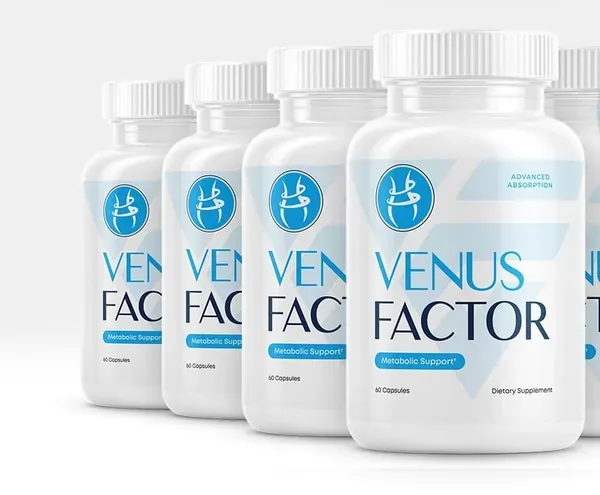
The Venus Factor is a capsule marketed to women for weight loss, taken once daily with water. Each bottle contains 60 capsules. The formula is described as a proprietary "Female Fat-Burning Hormone Formula" containing four plant-derived ingredients: genistein, Arctic lingonberry, Himalayan turmeric and Camellia sinensis, which is green tea. Every order includes access to a digital exercise program described as having helped over a million women.
The product's entire pitch rests on one hormone. The sales page describes The Venus Factor as "the only nutritional solution designed to address the true root cause of stubborn female fat," which it identifies as "a breakdown in how your body produces and responds to Leptin, its #1 fat-burning hormone."
Leptin is real, well characterized, and one of the more important discoveries in the biology of body weight. It is also a hormone whose relationship with obesity runs in the opposite direction from the one this page describes, and that is not a matter of interpretation. It has been measured in thousands of people and tested directly as a treatment. That inversion is the substance of this review.
A second element requires attention: several FAQ entries specifically address women who have stopped taking GLP-1 medications such as semaglutide, and offer the product as addressing why their weight returned. Disclosure, as on every page of this site: we are independent reviewers, and purchases through our links may earn us a commission at no additional cost to you.
How Does It Work?
The stated mechanism is that the four ingredients support "Leptin output, sensitivity, and the strength of Leptin's fat-burning signal," restoring the body's ability to burn fat and regulate appetite.
To evaluate that, the actual biology of leptin is worth setting out, because it is genuinely interesting and it is the reason this claim does not hold together.
Leptin is produced by fat tissue, and it signals sufficiency, not burning. Adipose cells secrete leptin roughly in proportion to how much fat tissue exists. It travels to the hypothalamus, where it acts as a signal that energy stores are adequate, reducing appetite. Its discovery in 1994 was a landmark, because it demonstrated that fat tissue is an endocrine organ rather than inert storage.
People with obesity generally have high leptin, not low. This is the finding that inverts the sales page. Because leptin is produced in proportion to fat mass, more fat tissue means more leptin. Circulating leptin levels are, on average, elevated in obesity rather than deficient. The problem researchers describe is leptin resistance: the signal is present, often abundantly, and the hypothalamus responds to it poorly.
Giving more leptin was tried, and it did not work for common obesity. This is the decisive piece of evidence, and it is unusual to have something so directly on point. After leptin's discovery, recombinant leptin was tested as an obesity treatment on exactly the logic the sales page uses. In people with common obesity, who already have high circulating levels, adding more produced disappointing results. Leptin therapy is genuinely effective, and it is approved, for congenital leptin deficiency and certain lipodystrophies, conditions that are extremely rare. The published literature on leptin and obesity treatment documents this history.
So the claim that a supplement helps by supporting leptin output faces a problem before any ingredient is examined: raising leptin in people who already have elevated leptin is an intervention that has been tested pharmaceutically and did not deliver. The alternative reading, that the ingredients improve leptin sensitivity rather than output, is a more defensible hypothesis, and the page claims both. Improving leptin sensitivity is an active research question with no established intervention, botanical or pharmaceutical.
One further point on framing. The page calls leptin "its #1 fat-burning hormone." Leptin does not burn fat. It is a signalling molecule that reports the size of energy stores to the brain, which then influences appetite and energy expenditure indirectly. The distinction matters because it is what makes the "boost your fat-burning hormone" framing sound actionable.
Core Ingredients Analysis
Four ingredients are named, which is more than several products in this category disclose. No doses are given for any of them, and the total blend weight is not stated either.
| Ingredient | Dose stated | Evidence snapshot |
|---|---|---|
| Genistein | None | A soy isoflavone that binds oestrogen receptors. Studied mainly for menopausal symptoms and bone density, with mixed results. Some laboratory work touches on adipocyte metabolism. Human weight outcomes are not established. |
| Arctic lingonberry | None | A polyphenol-rich berry. Most metabolic findings come from rodent studies, several using high-fat-fed mice. Human trials on body composition are limited. |
| Turmeric (curcumin) | None | Extensively studied for inflammation with generally modest and inconsistent results. Poor oral bioavailability without an absorption enhancer, which the page does not mention. |
| Camellia sinensis (green tea) | None | Catechins have documented modest effects on energy expenditure and fat oxidation. Long-term weight outcomes in trials are small. Concentrated extracts carry a rare association with liver injury. |
What the dose omission costs. Each of these ingredients has a body of research attached to particular quantities. Curcumin trials typically use hundreds of milligrams to grams daily, usually with piperine or a phytosome formulation because absorption is otherwise poor. Green tea catechin studies commonly use several hundred milligrams of EGCG. Genistein trials for menopausal outcomes have used doses in the tens of milligrams. Without a stated quantity for any of them, no comparison to that research is possible, and a proprietary blend total is not given either.
On the leptin connection specifically. None of these four ingredients has established evidence for improving leptin sensitivity in humans. Where leptin appears in research on them, it is generally in rodent studies measuring circulating leptin as one marker among several, which is a long way from demonstrating a clinical effect on appetite or body weight in people.
Safety notes that matter for the target audience. Genistein is a phytoestrogen with oestrogen-receptor activity, which is directly relevant because this product is marketed specifically to women, including women around menopause. Anyone with a history of hormone-sensitive breast cancer, or taking tamoxifen or an aromatase inhibitor, should not take a phytoestrogen supplement without oncology input. This caution does not appear on the sales page. Turmeric may interact with anticoagulants and can affect gallbladder conditions. Concentrated green tea extract has been associated with rare liver injury. Anyone taking prescription medication should review the full label with a doctor, and the doses needed for that conversation are not published.
The GLP-1 Rebound Framing
Two FAQ entries address women who have taken or stopped GLP-1 receptor agonists, and this section of the page warrants separate attention because of who it speaks to.
The page states: "Many women experience rebound weight gain after stopping GLP-1 medications because the underlying hormonal imbalance, particularly with Leptin, was never addressed. The Venus Factor targets the root cause by supporting healthy Leptin levels and sensitivity."
Two things in that are accurate and one is not.
Accurate: weight regain after discontinuing GLP-1 medications is well documented. Trials following participants after withdrawal have found substantial regain, and this is one of the more important practical findings about these drugs.
Accurate: the page does advise consulting a healthcare provider before combining any supplement with a prescription medication, which we credit.
Not established: the explanation offered for the regain. The mechanisms researchers describe involve the return of appetite signalling and energy expenditure adaptations once the drug's action ends, which is what would be expected when any pharmacological intervention on appetite stops. Attributing regain specifically to an unaddressed leptin imbalance is a hypothesis presented as the reason, and it is the premise on which the product is then offered as the solution.
We are not suggesting the page tells anyone to stop medication, because it does not. The concern is narrower and worth stating plainly: a reader who has discontinued a prescription treatment, is watching weight return, and is told the true root cause was never addressed is being given a causal story that the evidence does not support, at a moment when the more useful step is a conversation with the prescriber about options.
Real User Benefits & Drawbacks
Pros
- All four ingredients are named rather than hidden behind a blend name alone.
- Leptin is a real hormone with genuine importance in body weight regulation.
- ClickBank is the retailer, so refunds are processed by a third party.
- A 60-day money-back guarantee is stated, and the FAQ says unused product qualifies.
- One capsule daily with water is a simple routine.
- Stated as a one-time payment with no autoship enrolment.
- The FAQ does advise consulting a healthcare provider before combining with prescription medication.
Cons
- The leptin mechanism is inverted: obesity is associated with elevated leptin and leptin resistance, not deficient output.
- Raising leptin was tested pharmaceutically for common obesity and did not produce meaningful results.
- No doses for any of the four ingredients, and no blend total.
- "The only nutritional solution designed to address the true root cause" is a sole-solution claim.
- GLP-1 rebound is attributed to an unaddressed leptin imbalance, which is not established.
- Genistein is a phytoestrogen and the page carries no caution for women with hormone-sensitive cancer history.
- No single-bottle option, so the minimum purchase is $158 plus shipping.
- Recommended three to six months of use exceeds the 60-day refund window.
Pricing, Packages & Refund Policy
Three packages are offered, with no single-bottle option. Two bottles, a stated 60-day supply, at $158, which is $79 per bottle plus shipping. Three bottles at $207, or $69 each plus shipping. Six bottles at $294, or $49 each with free shipping. Every order includes the Venus Factor Body Sculpting Program, described as a $300-plus value.
The refund terms: 60 days from purchase, full refund of the purchase price less shipping and handling, with the product returned including empty bottles. The FAQ elsewhere describes returning "what you haven't used." ClickBank processes the transaction, so the refund route does not depend on the vendor.
The same arithmetic note applies here as to several products we have reviewed. The FAQ recommends "at least three to six months" of use for results, and the refund window is 60 days. A buyer following the vendor's own guidance passes the point of no return before the point at which results are said to appear. The six-bottle package is a 180-day supply against a 60-day window.
The bonus program's "$300+ value" and the claim that it has "helped over 1 million women" are figures with no published basis. Digital bonuses with high stated values are close to universal in this category and are generally best valued at zero when weighing a purchase.
How It Compares to the Alternatives
| Comparison point | The Venus Factor | Category norm |
|---|---|---|
| Ingredients named | Yes, all four | Variable |
| Doses published | None | Often a blend total at minimum |
| Mechanism | Real hormone, inverted direction | Real mechanism, overstated |
| Refund window | 60 days, return required | 60 to 180 days |
| Entry price | $158 plus shipping | Single bottle often available |
Against LeanBiome, which we rated higher, the difference is instructive. That product cites named studies and states a longer refund window, though it too withholds a decisive detail. Against Metabo Drops, The Venus Factor is more transparent, because at least the ingredients are named.
Against medical alternatives, the honest comparison is direct. GLP-1 receptor agonists have produced mean weight reductions in the region of 15 percent in published trials, with documented side effects, real costs and the regain-on-discontinuation problem this product's marketing invokes. That is a conversation for a doctor, and a reader weighing it should have accurate information about what a supplement can and cannot substitute for.
What the Independent Research Actually Says
On leptin as a treatment target. The trajectory is documented and instructive: a landmark discovery, enormous therapeutic optimism, and results in common obesity that did not match. Leptin therapy remains genuinely valuable for congenital leptin deficiency and certain lipodystrophies. Leptin resistance is an active research area with no established treatment.
On supplements for weight loss generally. The NIH's National Center for Complementary and Integrative Health, reviewing weight control and dietary supplements, concludes there is little evidence that any dietary supplement produces meaningful weight loss, and notes safety concerns with some.
On soy isoflavones. The NCCIH's page on soy covers what the evidence supports for isoflavones including genistein, along with the cautions relevant to hormone-sensitive conditions.
On turmeric. The NCCIH's turmeric summary notes that despite extensive study, evidence for health benefits remains limited, and that curcumin is poorly absorbed.
On the finished product. No clinical trial of The Venus Factor appears in the indexed literature. The evidence offered is ingredient-level, from studies at doses this product does not disclose.
What to Expect: A Realistic Timeline
Weeks one to four. One capsule daily. Green tea catechins may produce a small increase in energy expenditure. Some people experience digestive upset from turmeric or concentrated green tea extract.
Weeks four to eight. Any weight change in this window is more plausibly attributable to the attention that starting a program brings to eating and activity, particularly since the purchase includes an exercise program. This makes self-assessment unreliable in both directions. The 60-day refund window closes at around week eight.
Months three to six. The period the vendor recommends, entirely outside the refund window.
Worth noting: the bundled exercise program may well produce results, and if it does, those results come from the exercise. This is a common structure in the category and it makes attribution difficult for the person experiencing it.
Who This Applies To, and Who Should Avoid It
Because genistein is a phytoestrogen, anyone with a personal or family history of hormone-sensitive breast cancer, or currently taking tamoxifen or an aromatase inhibitor, should not take this without oncology input. This is the most important caution on the page and it does not appear on the vendor's.
Anyone taking anticoagulants should discuss turmeric with a doctor. Anyone with liver disease or a history of liver injury should be aware of the rare association with concentrated green tea extract. People who are pregnant or breastfeeding should not take a weight-loss supplement.
Anyone currently taking or recently discontinuing a GLP-1 medication should have the conversation about weight regain with the prescriber who managed the treatment. That is where the useful options are, including whether resuming or adjusting is appropriate, and it is a clinical decision rather than a supplement decision.
Frequently Asked Questions
What is in The Venus Factor?
A proprietary blend described as containing four plant-derived ingredients: genistein, Arctic lingonberry, Himalayan turmeric and Camellia sinensis, which is green tea. No dose is published for any of them, and no total blend weight is given. Each bottle holds 60 capsules, taken one daily.
Does boosting leptin help with weight loss?
The relationship runs the other way in most cases. Leptin is produced by fat tissue in proportion to its size, so circulating levels are generally elevated in obesity rather than deficient. Researchers describe leptin resistance, where the signal is present but the brain responds poorly. Recombinant leptin was tested as an obesity treatment and produced disappointing results in common obesity, though it remains effective for rare congenital leptin deficiency.
Can it help with weight regain after stopping a GLP-1?
Weight regain after discontinuing GLP-1 medications is well documented. The explanation offered on the sales page, that an unaddressed leptin imbalance is the cause, is not established: researchers attribute regain to the return of appetite signalling and metabolic adaptations once the drug's action ends. Anyone in this situation should discuss options with the prescriber who managed the treatment.
Is The Venus Factor safe for women with a history of breast cancer?
Genistein is a soy isoflavone with oestrogen-receptor activity. Anyone with a personal or family history of hormone-sensitive breast cancer, or taking tamoxifen or an aromatase inhibitor, should not take a phytoestrogen supplement without input from their oncology team. This caution does not appear on the vendor's page.
What does it cost and what is the refund policy?
Two bottles cost $158, three cost $207, and six cost $294 with free shipping. There is no single-bottle option. The stated policy is a 60-day money-back guarantee covering the purchase price but not shipping, with product returned. ClickBank is the retailer, so refunds are processed through the platform. The vendor recommends three to six months of use, which extends past the refund window.
Final Verdict: Is The Venus Factor a Scam or Legit?
The Venus Factor is a real product that ships, from a vendor using ClickBank as retailer, with a stated 60-day refund route that does not depend on the seller and no autoship enrolment. It names all four of its ingredients rather than hiding them, which puts it ahead of several products we have reviewed. And it is built on a real hormone: leptin's discovery genuinely changed how the biology of body weight is understood.
The mechanism runs backwards. Leptin is secreted by fat tissue in proportion to its mass, so people with obesity typically have elevated leptin rather than a shortage of it, and the research problem is leptin resistance rather than leptin output. This is not a subtle point or a contested one: recombinant leptin was developed and tested as an obesity treatment on precisely the logic this page uses, and in common obesity it did not deliver. It remains effective for congenital leptin deficiency, a condition affecting a very small number of people worldwide. A supplement claiming to support leptin output is proposing an intervention that has already been tried at pharmaceutical strength.
None of the four ingredients carries a dose, so no comparison to the research behind them is possible, and none has established evidence for improving leptin sensitivity in humans. Genistein's presence deserves particular note: it is a phytoestrogen in a product marketed to women, including women around menopause, and the page carries no caution for anyone with a history of hormone-sensitive cancer.
For a reader whose weight has been difficult to manage, the evidence-supported route runs through a doctor: thyroid function, insulin resistance, medication effects and sleep disorders are all diagnosable and several are treatable, and where medication is appropriate the options now available have documented results and documented limitations. For anyone who has stopped a GLP-1 and watched weight return, that conversation belongs with the prescriber rather than with a capsule.
Our rating: 3.6/5. This sits in our floor band (see how we rate), where we place a product with a documented integrity problem rather than merely thin evidence. Two specific reasons, taken from the vendor's own materials. First, "the only nutritional solution designed to address the true root cause of stubborn female fat" rests on a mechanism stated backwards: obesity is associated with elevated leptin and impaired response to it, and raising leptin has been tested as a treatment and did not work for common obesity. Second, women who have discontinued a prescription GLP-1 are told their regain occurred "because the underlying hormonal imbalance, particularly with Leptin, was never addressed," which is an unestablished causal claim aimed at people whose better option is a conversation with their prescriber. Credited for naming all four ingredients, a third-party refund route, no autoship, a simple once-daily format, and an explicit instruction to consult a healthcare provider before combining with prescription medication. Docked for the inverted mechanism, the absence of any dose or blend total, the sole-solution claim, the unsupported GLP-1 explanation, a missing phytoestrogen caution in a product sold to women, and a recommended usage period three times longer than the refund window.