
Introduction & What Is Purisaki?
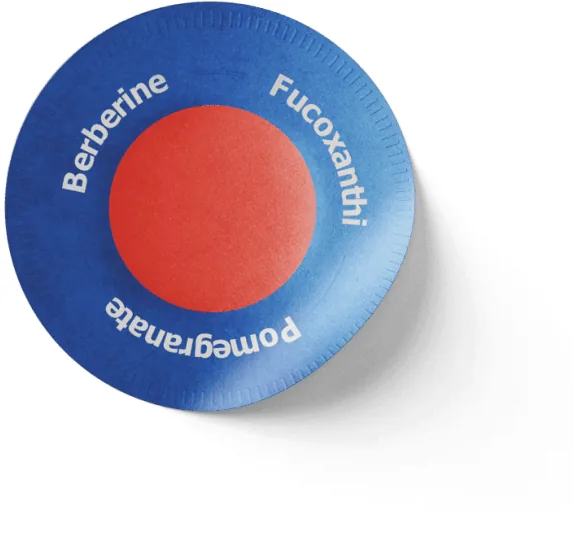
Purisaki Berberine is a transdermal patch marketed for weight loss. A patch is applied to clean dry skin on the shoulder, back or upper arm, pressed for 10 to 15 seconds, and removed after eight hours, with the next one placed on a different area to avoid irritation. The named ingredients are berberine extract, fucoxanthin, pomegranate oil, green tea extract, and what the page describes as "9 more natural ingredients such as African mango extract, vitamin C, B1 and B3."
Almost every product we review is something swallowed, and the analysis normally turns on doses and evidence. This one turns on something more basic that comes before either: whether the delivery route can work at all.
Berberine is a genuinely interesting compound with a real evidence base, and its central, well-documented limitation is that the body absorbs very little of it. Selling it as a skin patch is a claim about pharmacokinetics, and pharmacokinetics is a field with well-established rules about what skin will and will not let through. Those rules are the substance of this review. Disclosure, as on every page of this site: we are independent reviewers, and purchases through our links may earn us a commission at no additional cost to you.
How Does It Work?
The FAQ states that the patches "deliver natural ingredients such as berberine through your skin over a 24-hour period." A separate FAQ answer instructs removing the patch after eight hours. The page also describes a "gentle, steady release for 8 hours." These are three different durations for the same product, and we note the inconsistency without resolving it.
The proposed benefits are appetite regulation, blocked fat storage, and accelerated metabolism.
Transdermal delivery is a real and valuable pharmaceutical technology. Nicotine, fentanyl, scopolamine, estradiol, rivastigmine and clonidine are all delivered this way, and the patches work. Because the technology is real, the requirements for it are well characterized, and they are restrictive. The outer layer of skin, the stratum corneum, is an effective barrier, and a molecule generally needs three properties to cross it in useful quantities:
- Small size. Roughly under 500 daltons is the usual guideline.
- Appropriate lipophilicity, and no permanent charge. The barrier is lipid-rich. Molecules carrying a fixed electrical charge cross it poorly, because charged species do not partition into a lipid environment.
- Potency at very low doses. This is the constraint that decides most cases. A patch delivers, at best, single-digit milligrams per day across a realistic skin area. Every successful transdermal drug is active in the microgram-to-low-milligram range. Nicotine patches deliver 7 to 21 mg over 24 hours; fentanyl patches deliver micrograms per hour.
Berberine fails the second and third of these, and the third decisively.
Berberine is a quaternary ammonium cation, meaning it carries a permanent positive charge rather than one that varies with pH. That is close to a worst case for passive skin permeation.
The dose problem is larger still. The oral berberine trials that produced its reputation typically used 500 mg three times daily, around 1,500 mg per day. A transdermal patch delivering gram-scale quantities of anything does not exist, and the reason is physical rather than technological. For berberine to reach its researched dose through skin, a patch would need to deliver roughly a hundred to a thousand times more compound than the most powerful transdermal products on the market.
This is why the product's central premise does not hold together, and it holds together less well than for most patch products, because berberine's dose requirement is unusually high.
Core Ingredients Analysis
Four ingredients are named with descriptions, nine more are alluded to, and no dose is published for any of them.
| Ingredient | Oral evidence | Transdermal outlook |
|---|---|---|
| Berberine | The strongest in the formula. Meta-analyses of oral berberine report improvements in fasting glucose, HbA1c and lipid measures. Doses around 1,500 mg daily. | Permanently charged molecule requiring gram-scale dosing. Not a plausible transdermal candidate. |
| Fucoxanthin | A carotenoid from brown seaweed. Some human work in combination products, mostly small. Effects on body weight are modest and preliminary. | Large, highly lipophilic carotenoid. Poor permeation profile. |
| Pomegranate oil (punicic acid) | A fatty acid studied mainly in laboratory and animal models. Human weight evidence is limited. | Lipophilic, so it may enter skin, but no established systemic metabolic effect. |
| Green tea extract | Catechins have modest documented effects on energy expenditure at several hundred milligrams of EGCG daily. | EGCG is large and poorly permeating. Dose requirement far exceeds patch capacity. |
| African mango, vitamins C, B1, B3 | African mango extract has small, largely unreplicated trials. The vitamins have no weight-loss role in people who are not deficient. | Vitamin C is charged and hydrophilic; skin permeation is poor. |
The berberine evidence deserves to be stated fairly, because it is the best thing here. Oral berberine is one of the more interesting botanicals in metabolic research. Meta-analyses have reported reductions in fasting glucose and HbA1c, along with lipid improvements, with some trials comparing it favourably to older oral glucose-lowering agents. The indexed meta-analytic literature on berberine and glycemic control shows both the volume of interest and the variability in trial quality, much of it from smaller studies.
That evidence is entirely oral, at roughly 1,500 mg daily in divided doses, and it is mostly about glucose and lipids rather than weight. Applying it to a patch requires two leaps: from oral to transdermal, and from metabolic markers to the "5 kg per month" the page promises.
Berberine's absorption problem, correctly stated. Oral berberine has very low bioavailability, on the order of one percent or less. The marketing logic behind a patch appears to be that bypassing the gut solves this. It does not follow. Poor oral bioavailability results from limited intestinal absorption, efflux transporters and first-pass metabolism. Skin is a more restrictive barrier than the gut for a charged molecule of this size, not a less restrictive one. Choosing the skin does not route around the problem; it substitutes a harder barrier for a hard one.
Safety notes. Skin irritation and contact dermatitis are the common adverse effects of any adhesive patch, which is presumably why the instructions rotate application sites. Oral berberine carries meaningful interactions, inhibiting several cytochrome P450 enzymes and affecting metformin levels, and it is not recommended in pregnancy or for newborns. Those cautions apply to the compound at absorbed doses; whether they are relevant here depends on how much is absorbed, which is the unanswered question.
The Claims, Checked
| Claim as published | What can be verified |
|---|---|
| "Lose 5 kg per month easily" | A quantified weight-loss promise of roughly 11 pounds monthly. No published trial of this product exists, and no supplement has demonstrated results of this magnitude. Clinical guidance generally describes 0.5 to 1 kg per week as a target achieved with sustained dietary change. |
| "Feel the difference in just 1 week" and "reduce your waist in a few days" | Not supported. No mechanism described would produce measurable waist change in days. |
| "Scientifically proven" (of berberine) | Oral berberine has genuine evidence for glucose and lipid markers. That evidence does not extend to transdermal delivery or to this product. |
| Works "better and more safely than even the best premium weight loss supplements" | A comparative efficacy claim with no head-to-head study behind it. |
| "4.3, more than 8,658 reviews" and "sold 1M+ patches worldwide in just a few months" | On-site figures with no independent verification. The second appears in affiliate recruitment materials. |
| Delivery duration | The page states 24 hours in one place, 8 hours in two others. |
Real User Benefits & Drawbacks
Pros
- Berberine is a genuinely interesting compound with real oral evidence for metabolic markers.
- Four ingredients are named with descriptions rather than hidden entirely.
- A patch is simple to use and avoids swallowing capsules, which suits people who dislike pills.
- The FAQ advises consulting a healthcare professional during pregnancy, breastfeeding, or when taking medication.
- Instructions sensibly rotate application sites to reduce skin irritation.
- A standard FDA disclaimer is present, stating the product is not intended to diagnose, treat, cure or prevent disease.
Cons
- Berberine is a permanently charged molecule requiring roughly 1,500 mg daily orally, which no patch can deliver.
- "Lose 5 kg per month easily" is a quantified promise with no trial behind it.
- No doses are published for any ingredient.
- Nine of the thirteen ingredients are not individually named.
- The stated wear duration is inconsistent across the page: 24 hours in one answer, 8 hours in two others.
- Purchase defaults toward a "Subscribe & Save" recurring delivery rather than a one-time order.
- No refund window in days is stated on the page, only a link to a returns policy.
- Bypassing the gut does not solve berberine's absorption problem; skin is a more restrictive barrier for this molecule.
Pricing, Packages & Refund Policy
Three bundles are offered, priced per pack. A two-month supply of 60 patches at $69.98 total, shown as $34.99 per pack against a $99.97 reference. A four-month supply at $21.99 per pack. A six-month supply of 180 patches at $95.94 total, or $15.99 per pack, against a $299.81 reference.
The reference prices describe a roughly 70 percent discount presented as a limited-time offer. As elsewhere in this category, the crossed-out figures are best read as marketing rather than as prices the product has traded at.
Two commercial details deserve more attention than the discount.
The page steers toward a subscription. The bundle section is headed "Subscribe & Save" and describes patches "auto-delivered to your doorstep." Recurring billing is disclosed rather than hidden, which we credit, and it is also a different commitment from the one-time purchases that are standard across the products we review. Anyone ordering should confirm at checkout whether they are buying once or enrolling in recurring delivery, and should know how to cancel before they do.
No refund term is stated in days. The page links a returns and refunds policy but does not state a window on the sales page itself. Most products we review lead with "60-day guarantee" or similar, because it is a selling point. Its absence here means a buyer cannot know the terms without opening a separate document, and it is worth reading that document before ordering rather than after.
On the price comparison the page makes: it contrasts its own monthly cost with "premium weight loss supplements from $120 to $250." A lower price for a product that has not been shown to deliver its active ingredient is not a saving.
How It Compares to the Alternatives
| Comparison point | Purisaki patch | Oral berberine supplement |
|---|---|---|
| Delivery route | Transdermal, dose not stated | Oral, typically 500 mg three times daily |
| Matches the researched protocol | No | Yes, where dosed accordingly |
| Absorption | Not established for this molecule through skin | Low but measurable, around 1 percent |
| Doses published | None | Usually printed on the label |
| Purchase model | Steers to recurring delivery | Typically one-time |
The comparison worth making is not against other patches. It is against oral berberine, which is inexpensive, widely available, and carries the evidence this product invokes. Anyone specifically interested in berberine because of its metabolic research would be looking at a capsule with a printed dose, taken in the divided schedule the trials used, and having a conversation with a doctor first, because berberine's medication interactions are real and it should not be combined casually with glucose-lowering drugs.
Against non-commercial approaches, the NIH's guidance on weight management covers the interventions with established support.
What the Independent Research Actually Says
On transdermal delivery generally. The requirements are well characterized: low molecular weight, suitable lipophilicity, no permanent charge, and efficacy at low doses. The small number of drugs delivered this way reflects how restrictive those requirements are. It is not a route that has been overlooked by manufacturers; it is one that few compounds qualify for.
On weight loss patches as a category. No transdermal patch has been approved or established for weight loss. The NIH's National Center for Complementary and Integrative Health's review of weight control and dietary supplements concludes there is little evidence that dietary supplements produce meaningful weight loss, and patch formats have less supporting evidence than oral ones rather than more.
On oral berberine. Genuine and reasonably interesting evidence for glucose and lipid markers, from trials that are often small and of variable quality, at roughly 1,500 mg daily. Its poor bioavailability is one of the most discussed aspects of the compound in the research literature.
On the finished product. No clinical trial of Purisaki appears in the indexed literature, and no published pharmacokinetic data demonstrates that these patches deliver measurable quantities of berberine into circulation. That measurement is the one that would settle the question, it is straightforward to perform, and it has not been published.
What to Expect: A Realistic Timeline
Week one. A patch applied daily for eight hours. The page says most users notice appetite changes almost immediately, which is the period in which expectation effects are strongest and appetite is most susceptible to them.
Weeks two to eight. Any weight change is more plausibly attributable to the increased attention to eating that starting a weight-loss product brings than to a compound whose delivery has not been demonstrated. Skin irritation at application sites is the most likely physical effect.
Month three and beyond. The vendor recommends at least 90 days of consistent daily use, which on a subscription means at least three billing cycles.
A note that applies with unusual force here: because the patch is worn where it can be seen and felt, it provides a continuous reminder that a weight-loss effort is under way. That reminder may well influence eating behaviour. If it does, the effect belongs to the behaviour rather than to anything crossing the skin.
Who This Applies To, and Who Should Avoid It
Anyone taking metformin or other glucose-lowering medication should speak to a doctor before taking berberine in any form, since berberine affects glucose and interacts with metformin levels. This matters even where absorption is uncertain, because uncertainty is not the same as absence.
Berberine is not recommended during pregnancy or breastfeeding, and is specifically contraindicated in newborns. Anyone taking medication metabolized by cytochrome P450 enzymes, which covers a wide range of common drugs, should review it with a pharmacist or doctor.
People with sensitive skin, adhesive allergies or eczema should expect adhesive patches worn daily to cause irritation regardless of contents.
For anyone whose underlying concern is blood sugar rather than weight, that belongs with a doctor. Prediabetes and early type 2 diabetes respond well to intervention, the response window is finite, and berberine's genuine evidence is in exactly this area, which makes it a reasonable thing to ask a clinician about in its oral form rather than to self-administer through skin.
Frequently Asked Questions
Do berberine patches work?
The available evidence is insufficient to conclude that they deliver berberine into circulation. Berberine is a permanently charged molecule, which crosses the skin barrier poorly, and its oral trials used roughly 1,500 mg daily, a quantity far beyond what any transdermal patch delivers. Successful transdermal drugs are active at microgram to low-milligram doses. No pharmacokinetic data for this product has been published.
Does a patch solve berberine's absorption problem?
It does not follow that it would. Berberine's low oral bioavailability results from limited intestinal absorption, efflux transporters and first-pass metabolism. Skin presents a more restrictive barrier than the gut for a charged molecule of this size, not a less restrictive one, so choosing the skin substitutes a harder barrier rather than bypassing the problem.
Is oral berberine worth considering instead?
Oral berberine has genuine evidence for fasting glucose, HbA1c and lipid markers, from trials that are often small and of variable quality, at around 500 mg three times daily. It also has real medication interactions, affecting several cytochrome P450 enzymes and metformin levels, and it is not recommended in pregnancy. It is a reasonable thing to ask a doctor about, not to start unsupervised.
Can you lose 5 kg a month with these patches?
That figure appears on the sales page and has no published trial behind it. No dietary supplement has demonstrated weight loss of that magnitude, and clinical guidance generally describes 0.5 to 1 kg per week as a realistic target achieved through sustained dietary change and activity.
What does Purisaki cost and is it a subscription?
Bundles run from $69.98 for a two-month supply of 60 patches to $95.94 for a six-month supply of 180. The bundle section is headed "Subscribe and Save" and describes patches auto-delivered, so recurring billing is the steered option. Confirm at checkout whether you are making a one-time purchase. No refund window in days is stated on the sales page, only a link to a separate returns policy worth reading before ordering.
Final Verdict: Is Purisaki a Scam or Legit?
Purisaki is a real product that ships, and it is built around a genuinely interesting compound. Berberine has better metabolic evidence than most of what appears in this category: meta-analyses report improvements in fasting glucose, HbA1c and lipids, and it is a compound worth knowing about. The page names four of its ingredients with descriptions, carries the standard regulatory disclaimer, advises medical consultation in pregnancy and alongside medication, and sensibly instructs users to rotate application sites.
The delivery route is the problem, and it comes before any question of dose or evidence. Transdermal delivery works for compounds that are small, uncharged or weakly charged, and active at microgram to low-milligram quantities. Berberine is a quaternary ammonium cation, carrying a permanent positive charge that makes passive skin permeation poor, and its oral trials used roughly 1,500 mg daily. For a patch to deliver that, it would need to move a hundred to a thousand times more compound than the most powerful transdermal products in medicine. No pharmacokinetic data showing this product delivers measurable berberine has been published, and that measurement is both straightforward and decisive.
The marketing logic appears to be that berberine is poorly absorbed orally, so a patch should bypass the problem. That inverts the biology. Poor oral bioavailability comes from intestinal absorption limits and first-pass metabolism; skin is a tighter barrier than the gut for this molecule, not a looser one.
Two commercial points a buyer should know before ordering. The page steers toward recurring delivery rather than a one-time purchase, disclosed but easy to miss. And no refund window in days appears on the sales page, only a link to a policy document, which is unusual in a category where a stated guarantee is normally a headline feature.
For a reader drawn to berberine specifically, the version with evidence behind it is an oral capsule with a printed dose, taken in divided doses, discussed with a doctor first because the medication interactions are real. For a reader whose concern is blood sugar, that conversation matters more than the format, since early intervention works and the window is finite.
Our rating: 3.5/5. That is the floor of our scale: we do not publish a score below 3.5 (see how we rate), so where a product's conduct would otherwise rank lower, the specifics carry the weight instead of the number. Here they are. "Lose 5 kg per month easily" is a quantified weight-loss promise, roughly 11 pounds monthly, with no trial behind it and beyond what any supplement has demonstrated; it is accompanied by "feel the difference in just 1 week" and a claim to reduce the waist "in a few days." And "scientifically proven" is applied to berberine's oral research while the product delivers it through a route that has not been shown to deliver it at all. Credited for building on a compound with real oral evidence, naming four ingredients with descriptions, advising medical consultation in pregnancy and alongside medication, rotating application sites, and carrying the standard regulatory disclaimer. Docked for a delivery route that cannot plausibly carry a charged molecule at gram-scale doses, no published doses for any ingredient, nine of thirteen ingredients unnamed, a wear duration stated three different ways, a purchase flow that steers to recurring billing, and no refund window stated on the sales page.