
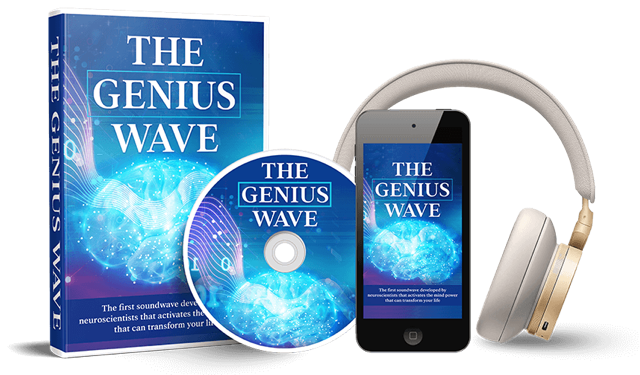
Introduction & What Is The Genius Song?
The Genius Song arrives with one of the boldest framings in the digital wellness market: the idea that nearly everyone is born with latent "genius potential," carried on a fast brainwave rhythm, gamma, that modern life systematically suppresses, and that the right engineered audio can help switch it back on. Strip away the drama and what remains is concrete: a digital audio program consisting of a roughly seven-minute session you listen to daily, sold for a one-time price of about $39, delivered instantly, and covered by a 90-day money-back guarantee.
It is a pure-audio product, no pills, no devices, no course curriculum. It belongs to the same product family as The Brain Song and The Memory Wave (all from Binaural Technologies), and it targets the same audience: students, knowledge workers, and older adults who feel mentally foggy or scattered and want a low-effort daily practice that might restore some edge.
This review takes the skeptic-friendly route the marketing invites: what you actually receive, what the gamma research really shows so far, honest pros and cons, complete pricing and refund details, and direct answers to the questions shoppers ask. As with every page on this site: we are independent reviewers, not the product's creators, and purchases through our links may earn us a commission at no extra cost to you.
How Does It Work?
The Genius Song stands on the same scientific platform as every gamma-audio product. The solid part of that platform: gamma oscillations, the brain's fastest commonly studied rhythms, genuinely correlate with peak attention, working memory, insight, and learning in the neuroscience literature. When researchers observe brains performing at their best, elevated gamma activity is frequently part of the picture. Sensory stimulation aimed at gamma frequencies (most famously 40-hertz light and sound protocols studied at major research institutions) is a legitimate, ongoing field.
The speculative part is the same one every product in this category shares: whether a short daily consumer audio session meaningfully raises your gamma activity, and whether that translates into feeling and performing sharper in ordinary life. Small entrainment studies show EEG responses to rhythmic audio; independent, large-scale evidence that programs like this improve real-world cognition does not yet exist. The marketing's "98% of people are born with genius potential" framing is storytelling wrapped around that gap, enjoyable, but not something a careful buyer should treat as established fact.
So the fair mental model: this is a professionally engineered, gamma-flavored version of a short, deliberate, eyes-closed audio ritual before demanding work. Brief relaxation practices of that kind have documented support for stress and attention regulation in the meditation literature. Whether the specific frequencies add anything on top of that ritual effect has not been established, and the available evidence is insufficient to predict it for any individual.
Core Features Analysis
| Feature | What you get | Why it matters |
|---|---|---|
| The Genius Song session | An engineered ~7-minute gamma-targeted soundwave audio track. | The product's entire thesis in a single daily session. |
| Daily protocol | Listen once a day, ideally with headphones, ideally before focused work. | Consistency is the mechanism; the schedule is the product. |
| Instant digital delivery | Immediate access on phone, tablet, or computer after checkout. | No shipping, no apps, no accounts beyond the purchase. |
| One-time $39 price | Single payment against a stated $97 regular value; no subscription. | A yearly focus-app subscription costs three times more. |
| 90-day ClickBank guarantee | Retailer-processed refund window. | Refunds are handled by the retailer, not the vendor. |
Who It Fits, and Who It Doesn't
The audience the product addresses is the curious self-experimenter: someone who reads about the 40-hertz research with genuine interest and is temperamentally capable of running a disciplined daily habit for a month. Students before study sessions, writers before drafting blocks, and older adults who want a daily "mental warm-up" ritual are the profiles the marketing targets. The seven-minute footprint is small enough to attach to an existing routine, which is where habits tend to survive.
The wrong buyer is anyone shopping for certainty. The honest state of the evidence cannot promise a specific outcome to a specific person, and the product's own dramatic marketing makes it easy to arrive with expectations no audio file could meet. Arrive as a scientist, not a believer, or do not arrive at all. And as with every product in this family: genuine cognitive health concerns belong with a physician, not a checkout page.
How to Evaluate It Honestly
The same evaluation method applies across this category: one fixed daily slot, headphones on, every day for thirty days, with a two-line written log of focus and clarity in the hours that follow. The written log matters because self-assessed sharpness is notoriously unreliable; a month of notes is a far better instrument than memory. Whatever the notes show is the evidence worth acting on.
A note on the product family: Binaural Technologies sells several gamma-audio offers with different names and sales presentations. Functionally they are variations on one theme; the mechanisms overlap almost entirely, and owning more than one is redundant. The Brain Song's presentation centers on deep-work focus, while The Genius Song's leans into creative insight and learning. The underlying audio practice is essentially the same either way.
Real User Benefits & Drawbacks
Pros
- About seven minutes a day, a commitment small enough to actually survive in a real schedule.
- One-time $39, no subscription, instantly delivered on any device.
- Anchored to a real research area (gamma-band stimulation), not a fabricated mechanism.
- Nothing ingested, no stimulants, no interactions, none of a supplement's safety homework.
- 90-day money-back guarantee processed by ClickBank, independent of the vendor.
Cons
- The boldest marketing in its product family, the "unlock your genius" framing outruns current evidence by a wide margin.
- No independent trials of the product itself; the science lives at the general-research level.
- Highly subjective outcomes, a significant share of listeners will register nothing beyond pleasant relaxation.
- Overlaps heavily with its sibling products; owning more than one gamma-audio program is redundant.
Pricing, Packages & Refund Policy
The Genius Song is a single digital package: a one-time promotional price of about $39, positioned against a stated regular value of $97. No subscription, no tiers. As with all ClickBank digital offers, optional upsells may be presented after checkout; none are needed for the core session to work. Access is immediate.
The stated refund policy is a 90-day money-back guarantee processed through ClickBank's retail support rather than the vendor. Keep your order confirmation email; requests go through the retailer's standard channel.
How It Compares to the Alternatives
Against nootropic supplements: the other aisle of the "sharper thinking" market sells capsules, racetams, adaptogens, mushroom blends, with real ingestion risks, interaction lists, and monthly recurring costs. A pure-audio product avoids ingestion entirely (no interactions, no dosing questions) and has a different cost structure (one payment versus a recurring bottle). What it gives up is any plausible direct biochemical mechanism. Neither category has strong independent evidence of cognitive enhancement in healthy adults.
Against brief meditation practice: the strongest free competitor is ten minutes of unguided breath-focused sitting, whose evidence base for attention regulation is far deeper than any entrainment product's. The Genius Song is best understood as that practice with training wheels: engineered sound that gives restless minds something to hold onto. If you have tried silent sitting and bounced off it, the audio scaffold is precisely the product's use case; if silence already works for you, you need nothing here.
Against its own siblings: The Brain Song shares the mechanism and price but frames toward deep-work focus; The Memory Wave targets memory. Because the overlap is heavy, buying more than one is rarely rational, our full comparison, The Genius Song vs The Brain Song, includes a decision path and the honest case for buying neither.
Against fixing the environment: no audio session out-competes a phone in another room, a closed door, and a single-tab screen. The cheapest cognitive upgrade remains subtraction, and every product in this category works better after it.
What the Independent Research Actually Says
"Genius frequency" is a marketing phrase, not a scientific one, so let's check the checkable claims against sources with nothing to sell.
Music, sound, and mental state. The strongest independent evidence for audio programs of this kind has nothing to do with genius: it is the well-documented effect of music and structured sound on stress, mood, and arousal. The NIH's review, Music and Health: What You Need To Know, summarizes decades of findings, meaningful support for relaxation and mood regulation, which are the mental soil that focus and creative work grow from. For approaches beyond audio, our article on overcoming creative block summarizes what research suggests may help.
Sound and cognitive performance. Does audio measurably sharpen thinking? The honest answer is "sometimes, modestly, and inconsistently", the literature spans background-music effects, entrainment protocols, and everything between. Survey it yourself in this PubMed search on music and cognitive performance; effect sizes are small and highly individual, which matches what buyers of this category actually report.
Relaxation practice as the active ingredient. A seven-minute eyes-closed daily session is functionally a meditation practice with a soundtrack. The NIH's evidence summary on meditation and mindfulness shows consistent, replicated benefits for stress and attention regulation from exactly this kind of brief, repeated practice. If The Genius Song gets someone to sit down and do that daily, the practice itself may account for more of any perceived effect than the frequency engineering does; that attribution has not been tested.
When fog is more than fog. If your interest comes from memory lapses that worry you or family members, read the Alzheimer's Association's guide to memory loss concerns first, it explains the difference between normal age-related change and signs that deserve a medical conversation. No audio program is a response to the latter.
What to Expect: A Realistic Timeline
- First session: You will know immediately whether the sound design suits you; this part is purely subjective.
- Weeks 1–3: Habit formation and possible ritual effects: sitting down to work already settled instead of scattered. If anything registers, it is most likely to be this.
- Weeks 4–8: Test the sharpness claim with real markers, sustained-attention minutes, first-draft output, how often you lose your thread mid-task. Write the numbers down weekly.
- Beyond week 8: a program that has produced no measurable change after eight weeks of daily use is unlikely to do so later; judge by your notes, not the sales page's enthusiasm.
Torn between this and its sibling product? We compare them head-to-head, same maker, different target states, in The Genius Song vs The Brain Song, and the full family context is in our Brain Song review and Memory Wave review.
Frequently Asked Questions
What is The Genius Song?
A digital gamma-brainwave audio program: roughly seven minutes of engineered audio to listen to daily, aimed at supporting focus and mental clarity. It is not a supplement or medication.
Does it really work?
Gamma-wave entrainment is a real research area with developing evidence, but there is no independent evidence on this specific program. Individual experiences range from "noticeably sharper" to "pleasant but neutral", and the available evidence cannot predict which a given listener will get.
How is this different from The Brain Song?
They are sibling products from the same family of gamma-audio offers, with different sessions and presentation. Functionally the experience is similar: short daily gamma-targeted audio. Pick one, you do not need both.
Do I need special equipment?
Just a device that plays audio and, ideally, headphones for proper stereo separation.
Is the purchase protected?
Yes, it is sold through ClickBank, which processes the 90-day money-back guarantee independently of the product's makers.
Final Verdict: Is The Genius Song Legit and Worth It?
The Genius Song is a legitimate digital product selling an oversized idea in a very small package. On the structural ledger, everything checks out: real deliverable, instant access, one-time pricing, and a stated 90-day retailer-processed refund policy. On the substance ledger, this review has been deliberate: the gamma research it gestures at is real and interesting; the leap from that research to "seven minutes of audio unlocks genius" is marketing, not science, and the available evidence is insufficient to conclude that the program improves cognition in daily life.
What can be said with confidence is narrow: brief daily relaxation practices have replicated support for stress and attention regulation, and this product structures one. Everything beyond that, the frequency-specific claims most of all, remains untested at the consumer level. Anyone whose interest stems from genuine cognitive concerns should start with a physician, not an audio file, and anyone who wants evidence before spending will not find it in this category yet.
Our rating: 4.0/5. The same low-cost, low-effort structure as its siblings, scored slightly lower for the widest gap between marketing promise and current evidence in the family.