
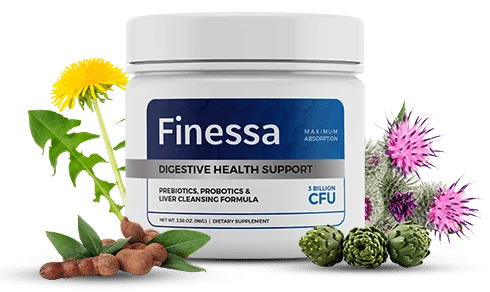
Introduction & What Is Finessa?
Digestive supplements occupy an odd space: the underlying science, gut microbiota, fiber, motility, is among the most active in modern medicine, while the products built on it are among the least tested. Finessa sits squarely in that gap. It is a daily digestive support formula combining prebiotic fiber (inulin), probiotic strains, and a set of botanicals traditionally associated with bile and liver function: milk thistle, artichoke, dandelion, turmeric and ashwagandha.
Its distinguishing choice is the framing. Where most gut products stop at "probiotics for balance," Finessa builds its story around the gut-liver axis, the genuine two-way relationship between digestion and the organ that produces bile. That is a real physiological concept and an active research area, which puts Finessa's premise on firmer ground than most of the shelf, provided the claims stay proportional to what has actually been shown.
The product targets adults dealing with irregularity, sluggish digestion and post-meal discomfort. The manufacturer positions it as support for digestive comfort and regularity, not as a treatment for any condition, and that boundary matters: persistent bowel changes have causes that need a doctor rather than a capsule.
Below: the mechanism, the ingredient evidence, honest pros and cons, pricing with the 180-day refund terms, and what a realistic adjustment period looks like. Disclosure, as on every page of this site: we are independent reviewers, and purchases through our links may earn us a commission at no additional cost to you.
How Does It Work?
Finessa's approach layers three mechanisms. The first is prebiotic fiber: inulin is a fermentable fiber that feeds beneficial gut bacteria and adds to stool bulk. This is the formula's best-supported component, with a real literature on stool frequency and microbiota composition, and one honest caveat that the marketing omits: inulin is famously gas-producing in the first weeks, and people with IBS often tolerate it poorly.
The second is probiotic strains: introduced bacteria intended to support the resident community. The research here is strain-specific and genuinely mixed. Certain strains have decent evidence for stool frequency; others have none for that outcome. Whether any given product's strains match the studied ones is usually impossible to determine, and Finessa does not publish strain designations or CFU counts in its marketing materials.
The third is bile-adjacent botanicals: artichoke and dandelion are traditional choleretics (substances that stimulate bile flow), and bile genuinely matters for fat digestion. Artichoke leaf extract has the most credible research of the group, with small trials on functional dyspepsia symptoms. Milk thistle's evidence concerns liver enzymes rather than digestion. Turmeric and ashwagandha are broad-spectrum inclusions rather than targeted ones.
The honest picture: the gut-liver axis is real, prebiotic fiber and some probiotic strains have genuine research on regularity, and artichoke has small supportive trials. But the finished formula has no independent testing, strain-level evidence does not transfer automatically, and constipation has causes, medications, thyroid disease, dehydration, and occasionally serious ones, that a supplement cannot address and a doctor can.
Core Ingredients Analysis
| Ingredient | What the manufacturer includes it for | Evidence snapshot |
|---|---|---|
| Inulin (prebiotic fiber) | Feeds beneficial bacteria and adds stool bulk. | The formula's best-supported component; real evidence on regularity and microbiota, with well-documented gas and bloating early on. |
| Probiotic strains | Support the resident gut community. | Strain-specific and mixed; some strains have decent regularity data, but designations and CFU counts are undisclosed here. |
| Artichoke extract | Traditional bile-flow botanical for digestive comfort. | The best-researched botanical in the blend; small trials on functional dyspepsia symptoms. |
| Dandelion root | Traditional choleretic and digestive bitter. | Long traditional use, thin clinical evidence in humans. |
| Milk thistle (silymarin) | Liver support in the gut-liver framing. | Studied mainly for liver enzymes with inconsistent results; not a digestion intervention. |
| Turmeric & ashwagandha | Anti-inflammatory and stress-response support. | Broad research bases; both are general inclusions rather than targeted digestive agents. |
What stands out positively: pairing prebiotic fiber with probiotic strains is a coherent design (a synbiotic approach), artichoke is a defensible evidence-based botanical choice, and the ingredients are named rather than hidden in a blend.
What deserves scrutiny: strain designations and CFU counts are not disclosed, which in probiotics decides whether any borrowed research applies. The stress-and-liver back half of the formula broadens the label more than the digestive evidence. And the sales framing does not warn about inulin's very predictable early gas, which is the most likely thing a new user will actually experience.
Safety notes: people with IBS frequently tolerate inulin poorly; those with gallbladder disease or bile duct obstruction should avoid bile-stimulating botanicals without medical advice; milk thistle and turmeric interact with several medications. Anyone with persistent constipation, especially with blood, weight loss, or a sudden change in bowel habits, needs a doctor rather than a supplement. For a related metabolic-digestive topic, see our article on why belly fat is so hard to lose.
Real User Benefits & Drawbacks
Pros
- Synbiotic design (prebiotic fiber plus probiotic strains) is a coherent, research-aligned approach.
- Inulin has genuine evidence for regularity and feeding beneficial bacteria.
- Artichoke extract is a defensible botanical choice with small supporting trials.
- 180-day money-back guarantee processed through ClickBank, far longer than an adjustment period needs.
Cons
- Inulin commonly causes gas and bloating early, and poorly for many people with IBS; the marketing does not prepare buyers for this.
- Strain designations and CFU counts undisclosed, so probiotic research cannot be matched to the product.
- Liver botanicals broaden the label more than the digestive evidence.
- No independent trials of the finished formula; persistent bowel changes need a doctor.
Pricing, Packages & Refund Policy
Finessa is sold in single, 3-bottle and 6-bottle packages through the official website only. At the time of writing, a single bottle (a 30-day supply) is listed at a promotional price near $59 against a stated regular price around $99, with bundles bringing the per-bottle price down toward $49 and lower on the largest package. Shipping terms vary by package; confirm live figures on the official page, since ClickBank offers change often.
For scale: prebiotic and probiotic studies on regularity typically ran four to twelve weeks, and the gas-and-bloating adjustment period alone can occupy the first two to three weeks. One bottle is not a fair test; two to three is closer.
The stated refund policy is a 180-day money-back guarantee on purchases through the official website, processed through ClickBank's standard retail support. Keep the order confirmation email.
How It Compares to the Alternatives
Against psyllium: the most-evidenced fiber supplement for constipation is cheap, widely available, and better studied for this exact outcome than any blend. It also tends to cause less gas than inulin, since it ferments less. For regularity specifically, psyllium is the benchmark Finessa has to beat.
Against food: inulin occurs naturally in chicory root, onions, garlic, leeks and asparagus; fiber generally comes from a diet built on plants. The dietary route delivers the same mechanisms with the rest of the food matrix, and it is where the evidence for long-term gut health is strongest.
Against single-strain probiotics: if a specific strain has evidence for your specific issue, buying that strain at the studied dose is more rational than a blend whose composition you cannot verify.
Against medical evaluation: chronic constipation has a real differential diagnosis, medications, hypothyroidism, pelvic floor dysfunction, and in some cases structural disease. A doctor can identify a cause; a supplement can only work around one. Red-flag symptoms make that visit urgent rather than optional.
What the Independent Research Actually Says
Start with the condition. The NIH's digestive institute (NIDDK) publishes a clear guide to constipation, its causes, the established treatments, and the symptoms that warrant medical attention.
Fiber, honestly measured. This PubMed search on inulin and constipation shows the modest, real effects on stool frequency alongside the tolerability problems that regularly appear in the same trials.
Probiotics, the honest state of the field. The NIH's complementary-health center's overview of probiotics is the sober reference: promising in specific situations, strain-dependent, and frequently oversold.
Artichoke's small signal. The blend's most credible botanical has real trials behind it; see this PubMed search on artichoke leaf extract and dyspepsia, keeping the small sample sizes in view.
The regulatory frame. Finessa is regulated as food under the FDA's dietary supplement framework, with no pre-market efficacy review, which is why the refund route carries weight in our verdict.
The wider context. Constipation has more causes than low fiber, and several of them are not addressed by any supplement. Our guide to chronic constipation in adults covers medication effects, transit, pelvic floor coordination, and the red flags that need a doctor.
What to Expect: A Realistic Timeline
- Days 1–14: The adjustment period, and the honest headline of this product. Inulin ferments, so gas and bloating are common and expected here rather than a sign something is wrong. Starting with a reduced dose and building up is the standard way to ease it.
- Weeks 3–8: The window where prebiotic and probiotic regularity studies measured effects. Track something countable, bowel movements per week and straining, rather than a general sense of "feeling better."
- Weeks 9–12: Fair-verdict territory. If your tracked numbers have not changed and the early gas has not settled, the formula is not working for your gut, and the 180-day window leaves ample room to act on that.
Throughout: blood in the stool, unexplained weight loss, persistent pain, or a sudden change in bowel habits are reasons to see a doctor promptly, not to adjust a supplement.
Who the Evidence Applies To, and Who Should Avoid It
The inulin research describes adults with functional constipation, taking gram-level doses over four to twelve weeks, and it reports two things consistently: modest improvements in stool frequency, and a meaningful rate of gas and bloating, especially early. Both halves of that finding apply to anyone taking this product, and the sales page mentions only the first. A reader who understands that the second is coming, and that it typically settles, is far better prepared than one who meets it as a surprise and concludes something is wrong.
There is one group for whom inulin is a poor match, and it is a large one. People with irritable bowel syndrome frequently tolerate fermentable fibers badly; inulin is a FODMAP, and low-FODMAP approaches, which exclude it, are among the better-evidenced dietary interventions for IBS symptoms. So a person whose bowel pattern alternates, who bloats painfully, and who has been told they have IBS is quite likely to feel worse on this product rather than better, and that is a predictable consequence of the formula's design rather than bad luck.
Several groups should get medical input first. Anyone with gallstones or a known bile duct obstruction should avoid choleretic botanicals like artichoke and dandelion, which stimulate bile flow into a system that may not drain properly. Milk thistle and turmeric have documented interaction routes with several medication classes. People who are immunocompromised should discuss live probiotic products with their doctor. And anyone with inflammatory bowel disease deserves a specialist's view rather than a supplement decision made alone, because the underlying condition changes what is safe.
Finally, the symptoms that make this product the wrong tool entirely: blood in the stool, unexplained weight loss, persistent abdominal pain, vomiting, a family history of colorectal cancer, or a change in bowel habit that arrived suddenly and stayed, particularly after age 45. Those are reasons to see a doctor rather than to start a fiber blend, and constipation that appears out of nowhere in an adult who never had it is a symptom worth explaining rather than managing.
Frequently Asked Questions
What is Finessa?
A daily digestive support supplement combining prebiotic fiber such as inulin, probiotic strains, and botanicals including milk thistle, artichoke, dandelion, turmeric and ashwagandha. It is a supplement, not a medication.
Does Finessa help with constipation?
Prebiotic fiber and certain probiotic strains have research suggesting modest improvements in stool frequency and consistency, though results vary by strain and person. The finished formula is untested, so the available evidence is insufficient to conclude how it performs.
What does the liver have to do with digestion?
The liver produces bile, which helps digest fats, and the marketing builds on that gut-liver relationship. The botanicals included have some research on bile flow and digestive comfort, but this remains an area of active study rather than settled evidence.
Does it cause side effects?
Prebiotic fiber commonly causes gas and bloating in the first weeks as the gut adjusts. Starting at a lower dose can ease that. People with gallbladder or liver conditions should ask a doctor before taking bile-stimulating botanicals.
Where is it sold and what is the refund policy?
Through the official website with ClickBank checkout and a stated 180-day money-back guarantee processed through ClickBank's retail support.
Final Verdict: Is Finessa a Scam or Legit?
Finessa is structurally legitimate and better designed than much of its category: the synbiotic pairing of prebiotic fiber with probiotic strains reflects how the research actually works, the gut-liver axis it invokes is a real physiological relationship, artichoke is a defensible evidence-based inclusion, and the 180-day ClickBank refund route does not depend on the vendor's goodwill.
The limits are the familiar ones plus one specific to this formula. Strain designations and CFU counts are undisclosed, the finished product has no trials, the liver botanicals stretch the label further than the digestive evidence, and inulin's near-certain early gas is something the marketing never mentions but every new user may meet. The evidence-supported sequence stays: a doctor's evaluation for persistent or red-flag bowel changes; fiber from food, hydration and movement next, the levers with the strongest data; psyllium if a fiber supplement is wanted for regularity specifically; and only then, optionally, a formula like this as an unproven addition judged by counted bowel movements rather than by feel.
Our rating: 3.9/5. Credited for a coherent synbiotic design, a real physiological premise and a generous refund window; docked for undisclosed strains and doses, no product-level trials, and a sales story that omits the tolerability issue buyers are most likely to encounter.